Pumpkin Quesadillas

pumpkin quesadillaI told you when I learned about that awesome cooking method for winter squash that I’d be using it a lot.

American readers, how was your Thanksgiving? I managed to fill myself up on assorted vegetables and cheeses from the platter I brought for pre-dinner snacking (my family does a potluck type Thanksgiving meal) and ended up being the perfect amount of full without going over when it came to turkey hour.

How was everyone else’s weekend? Because I work in the natural food industry, and so much of my focus last week was on, “Try this. How about this recipe? Have you purchased you turkey?” type promotions, I was all food-ed out after the day of giving thanks and worshiping turkey was over. Of course, food is my passion, so I wasn’t dreaming of take-out for long.

And suddenly, here’s December. It’s cold. It’s snowing. Electricity at the house and at work has become a chancy thing, so I put together a filling, taste-sensation type of meal that is easy to assemble — even if you’re doing it by candlelight.

Pumpkin Quesadillas

Serves 2-3 people, depending on appetite

1 sugar pie pumpkin or other winter squash, cooked (I used a kuri squash. A can of pumpkin puree would work, too.)
½ cup soft, white cheese like queso fresco (I used Laychee from Pennyroyal Farm. A white cheddar would also work if you didn’t have access to a softer cheese.)
¼ – ½ cup Hatch chiles or other green pepper, cooked and diced
½ cup black beans
Green salsa
4 Gluten-free tortillas
Pumpkin seeds for garnish

Warm up a griddle or large pan on medium heat. Lay 2 tortillas on griddle. Spread squash over the tortilla, going almost to the ends. Follow with a sprinkling of cheese, then chiles, then black beans. Cover with tortillas.
When the cheese has melted, carefully flip the quesadillas over and cook on the other side for 3-5 minutes.
Remove from heat and cut quesadillas with a pizza cutter into wedges. Drizzle with green salsa and sprinkle with pumpkin seeds.

I paired this meal with Anchor Brewing’s Christmas Ale. It’s an amazing brew each year, and the 2013 did not disappoint. Man it’s a fantastic seasonal ale! If it’s available in your area, BUY IT. I look forward to it each December.


When Michael Pollan came to Town

photo from Michael Pollan's website press kit

photo from Michael Pollan’s website press kit

The Grass Valley Veterans Memorial Auditorium was packed with people eagerly awaiting their Evening with Michael Pollan. The low hum of hundreds excitedly chatting permeated the space, words like “food” and “cooking” occasionally presenting themselves to the ear like auditory snacks.

On stage sat a homey tableau – two chairs on a comfy rug, a large stump playing the part of a table for a pair of water glasses.

Michael Funk introduced Beth Ruyack, the evening’s moderator, and Michael Pollan, each emerging from the folds of the theatre curtain onto the stage. They took their seats, sat back, and the discussion began.

Pollan talked about his epiphany, driving down I-5 to Fresno and being hit with the stench of the giant feed lot that’s on the way. He saw head upon head of black cows, standing close together, feet sunk in mud and their excrement. It made him realize that he didn’t really know where his food was coming from.

And then he had a second epiphany while working on a story about a potato farm in Idaho. The farmer sprayed his fields while protected inside a bunker, the neurotoxins coating his fields too deadly to be exposed to. The potatoes had to off-gas for six weeks after harvest before they were suitable for consumption. Meanwhile, the farmer had a small, organic plot of potatoes right next to his house for his and his family’s meals.

From discussing epiphanies, Ruyak steered the conversations to the books that had grown from those first seeds of realization – in 2001, “The Botany of Desire,” in 2006, “The Omnivore’s Dilemma,” 2008 brought “In Defense of Food,” 2009, “Food Rules,” and finally this year gave us “Cooked: A Natural History of Transformation.”

Pollan wove in knowledge gleaned from his most recent undertaking into many of the discussions that filled the evening, including the theory that cooking allowed for our bigger brains, how much he enjoyed writing the book, and how important cooking is to our humanness.

“Cooking is a powerful way to reengage with nature … to connect with people … we’ve lost a lot as cooking has declined,” he said.

As food politics were covered and audience members were welcomed to pose their own questions, Pollan maintained a gracious manner, answering with sincerity and thoughtfulness. He engaged with each questioner a level of both professionalism and approachability that spoke to his years of journalism and teaching.

For almost two hours, the auditorium was filled of laughter from witticisms, gasps of surprise when a food policy or process was brought up for many attendees’ first time, outrage at how industrial farming has disconnected us from the source of our food, and inspiration when Pollan showed that change was attainable. “An Evening with Michael Pollan” was one heck of a night, and one that the attendees will long remember. When the house lights came up and Ruyak and Pollan exited the stage, the excited hum from the crowd was as permeable as ever.

Dynamite Gluten-free Pancakes

Pancake-Waffle-MixThis week’s post is a quickie, but I think it’s a good discovery, and you might just read this in time to pick up some mix before your Sunday brunch.

This past Sunday morning, I broke out a gluten-free sample we had for some pancake and waffle mix. We’ve tried quite a few mixes in the last year or so, and this one is by far the winner. It’s from XO Baking Company, and it is flippin’ fantastic. The pancakes were between the thickness of a crepe and a sourdough pancake, and they were so tasty. The consistency was smooth, and the flavor was perfect. I was so excited that when I took a bite, the first thing I said to Charles — after I stopped chewing, of course — was, “I have to tell my blog readers about this!”

I just special ordered a case of the mix today. I didn’t get compensated for this post at all. The sample was something Charles brought home from work (the perks of working in grocery), and I was so pleasantly surprised by how the pancakes came out. With most GF mixes, I’ve found that I have to add applesauce to the recipe in order to get moist, flavorful pancakes, but as I said before, this mix was perfect. Obviously, I’m sold. I did just buy a case, after all.

My Sunday brunches are planned out for the next few months, I think.

Kuri Squash and Bacon Soup

red-kuri-squash-soupFlu season is here, and I’ve already fallen prey to a strain that had me bedridden for most of a week. When I could eat again, I wanted something rich, filling, warm, and easy, as my stamina wasn’t back yet. Using my fab new technique to cook squash, I plopped in a couple of my favorite variety, Red Kuri, and took a nap.

Nap achieved, I had some beautifully cooked squash and no recipe bubbling up into my consciousness, so I did what every cook does when they want something but can’t find anything that quite satisfies the craving — I made it up. What was produced in my soup pot will be a dish I replicate quite often, as it was tasty with a capital T, and it was exactly what my recovering body needed.

Kuri Squash and Bacon Soup

serves four

2 Red Kuris, cooked, seeds and skin removed (If Kuris aren’t available, other winter squash, like sugar pie pumpkins or butternut, will work just fine.)
10 slices of bacon, cooked crispy and chopped
5 cups chicken stock
1 cup half and half
1 cup white wine (I used Chardonnay.)
Sriracha to taste (I used two healthy squeezes.)
2 teaspoons dried sage
salt and pepper to taste

Using a food processor, blend the squash and stock until smooth. You will need to do several batches so as not to overload the processor.
Dump in a soup pot and cook on medium heat until it begins to bubble. Add bacon, Sriracha, and sage. Stir well. Taste to see how much salt and pepper is needed and if you need to add more sage or Sriracha. Add wine and bring back to a slow simmer.
Pour in half and half and stir well. Taste once more to check and see if any final adjustments are needed. If all is to your liking, pour into bowls and enjoy.

Pairing notes: As I was recovering from the flu, I paired my soup with water. Another option would be using the wine that you used in the soup. Charles paired his bowl with a Pinot Noir and enjoyed it immensely.

Acorn Squash Lasagna

acorn squashRemember last week when I waxed poetic on winter squash? Well, today I’m going to share a recipe, a pairing, and an amazing tip that I received from my friends Joey and Bill.

The dinner party that Charles and I had attended at the aforementioned friends’ house had winded down. As we shared a bit of dessert and finished our wine, they shared with us their secret to cooking winter squash — the slow cooker. It’s easy, Bill told us, you just poke the squash with a fork a few times, stick it in the cooker — no water needed — turn it on low, and let it go.

Of course, I had to try it myself. I washed off an acorn squash, (it still had some farm dirt on it,) poked some holes in it with a fork, and stuck it in the slow cooker before I left for work. When I got home that afternoon, the house smelled heavenly, and the squash was cooked perfectly. So easy! Thanks to Joey and Bill’s tip, winter squash will now be a main ingredient in many a dinner in the months ahead.

My now cooked squash became the star of the evening meal, Acorn Squash Lasagna — one of my all-time favorite dishes. I’ve played with the recipe a few times over the years, tweaking it until I was perfectly happy with it. It’s savory and just a wee bit sweet and filling enough that a square will do you for your dinner requirements.

winePairing this lasagna has always been more of a challenge than cooking it, as the squash flavors and cheese flavors don’t always complement a wine well, but I finally found something that works wonderfully. It’s Ventana‘s Chardonnay, a wine that Charles had brought into the store on a vendor’s recommendation. He had brought home the last two bottles the week before. A side note — the psychology of shoppers is often interesting. Did you know that customers are uncomfortable with purchasing the last item on the shelf? Especially with wine and beer, that last bottle will just stand lonely on the shelf while people pass it by. Because of this, Charles often purchases the final hold-outs of wine vintages and seasonal beers. It works for us, as Charles stocks his shelves with excellent options, and our cellar becomes more and more diverse. But back to this particular pairing … the Ventana paired well, its creaminess rounding out the lasagna. Nutmeg characteristics in the glass were the perfect, seasonal accompaniment with the squash. The pairing just screams, “Autumn!”

lasagna
Acorn Squash Lasagna

serves two

1 acorn squash, cooked, seeds and skin removed
1/4 teaspoon dried, rubbed sage
salt and freshly ground pepper
8 ounces goat ricotta cheese
1/2 cup grated Parmesan
4 gluten-free lasagna noodles (I used Tinkyada Rice Lasagna)
1 egg, beaten
1 tablespoon butter

Preheat oven to 400 degrees F.
Cook lasagna noodles to package directions. I broke mine in half to fit the baking dish nicely.
Rub butter along the insides of a square baking dish.
Mix squash with sage, salt and pepper.
Mix ricotta with egg.
Place two lasagna pieces in the bottom of the dish. Spread with half of the squash.
Place two lasagna pieces on top, and spread with half of the ricotta mixture.
Repeat the lasagna-squash step, then the lasagna-ricotta step.
Sprinkle the top of your creation with the Parmesan, cover the dish with foil, and cook for 45 minutes. Remove the foil and cook for 20 more minutes.

Harvest Season

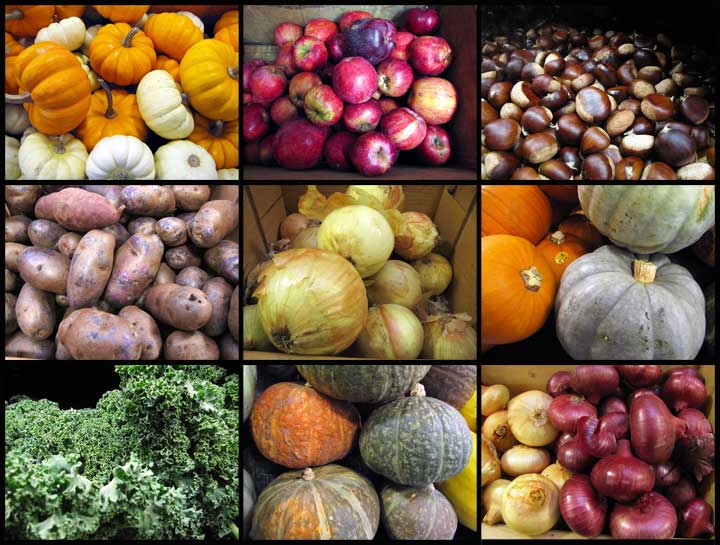
harvest season I love harvest season, all of the winter squash rolling in, the more muted colors of produce becoming dominant. The air kisses your cheeks scarlet and wood smoke curls above chimneys — it’s a beautiful time of year. For me, there’s almost a manic jubilance as if I have to get in as many sunny days outside as is humanly possible, and dinners tend to switch between the final salads from the summer crops and the common pasta dishes of chilly evenings.

A note on pasta — I’ve shared my favorite gluten-free pasta already, but I should let you in on the secret of Jovial. Their pastas are made from einkorn, the predecessor to our modern wheat. I’ve found that I’m able to eat einkorn with none of the issues of modern wheat — no gut problems, no swollen joints. The flavor is nutty, and the texture of the cooked pasta is like any al dente. Plus, it’s nutritious. I love it, and I’m glad that it’s a viable alternative to white and whole wheat pastas. I’m sure it will be gracing my dinner table on many a brisk night, especially as the snows find their way to our slopes.

A Successful Event

Owner Meeting 2013Well, the annual owner meeting for the store ended up being a rousing success, and the Cajun theme was mighty popular. All of the feedback I’ve had so far can be summed up like so: fun, good food, good wine, and a great night.

It’s wonderful to have this year’s event accomplished. I only have a smattering of photos, as once the doors opened, I was on bar duty, but believe me when I say that the venue was full and almost everyone was constantly smiling. And the big wine winner of the evening? Sobon, hands down. It was the most requested glass, and the most requested refill.

Of course, success doesn’t come without a price. I’ve woken up at 1:00 each morning this week, going over the lists of requirements until finally getting up to ready myself for the workday. At this point, my brain is pretty foggy and exhausted, but it was worth it. It was a pretty, festive, and fantastic evening. Now, however, I’m ready for a nap.

Braised Collards

Serves: 4

10 leaves (1 bunch) of collards
2 to 3 tablespoons olive oil
1/2 onion, cut in crescents
5 cloves garlic, minced
2 tablespoons water
1 tablespoon tamari
1 tablespoon mirin
A few drops of sherry vinegar

Wash greens carefully and remove stems. Chop leaves into bite-size pieces.
Heat a large skillet over medium heat. Add oil and onion. Sauté onion and garlic over low heat, stirring occasionally, until translucent and soft. Add collards and toss to coat with oil. Sauté over medium heat until leaves begin to turn brilliant green and wilt down.
Mix together water, tamari and mirin. Pour into pan. Cover pan tightly. Braise until leaves are tender, 5 to 8 minutes, adding 1 to 2 tablespoons of water if pan becomes dry. Taste to check for doneness; greens should be tasty, not bitter. Sprinkle with a few drops of vinegar before serving.

Jambalaya

jambalayaI’ve made jambalaya before, but I had a different goal in mind with this creation — finding a white wine that would work.

Every year, I’m in charge of putting together the annual owner meeting for the store. Each year, the event has become more and more successful, to the point that I’m now coordinating an event for 500 co-op owners. Past themes have included Halloween, Oktoberfest, wine harvest, and Italian cuisine. This year, the focus is on Cajun food.

It promises to be chilly the evening of the meeting and dinner, so the spicy jambalaya that will be served should be well received. However, attendees have come to expect a good wine or beer pairing with the meal, and since some people are red wine drinkers exclusively, while others are exclusive to white wine, the multi-layered flavors of this year’s main dish posed a bit of a challenge.

The red wine choice was pretty straight forward — a fruit-forward Zinfandel seemed like the best option. Since my partner is also the wine buyer, I bowed to his preference for the label. Charles opted for Sobon — always nice. But the white, the white … with sausage and shrimp and chicken and spicy … my first instinct was for an off-dry Riesling, but we wanted to test it out. I’ve read that Sauvignon Blanc can work as well, so I put together a quick jambalaya and got to tasting.

While the Sauv Blanc stood up to the dish, it was just present. It didn’t sing. Then we tried an off-dry Riesling and found the tune. The sweetness harmonized with the spiciness quite well, and it paired nicely with each meat in the dish. So my first instinct ended up being the right one. We’re going with Pacific Rim. All of their wines are lovely and all pair so well with food.

Of course, I’d be remiss if I didn’t share with you our beer choice for this year as well. We’re offering Anderson Valley Brewing Company Winter Solstice and Boont Amber. Mmmm… such good beer!

Quick Jambalaya (not really traditional, btw)

12 prawns, peeled, deveined, and chopped
1 chicken breast, diced
1 tablespoon Cajun seasoning (I actually used a rub)
2 tablespoons olive oil
1 green bell pepper, chopped
1 yellow onion, chopped
2 cloves of garlic, smashed and chopped
3 Roma tomatoes, chopped
3 bay leaves
1 teaspoon Worcestershire sauce
1 teaspoon hot sauce (I actually used sriracha since I already had it in the fridge.)
3/4 cup rice
3 cups chicken stock
2 Andouille sausages, sliced
salt and pepper to taste

Toss prawns and chicken in a bowl with the seasoning, set aside.
In a saucepan over medium high heat, add olive oil, onion, and bell pepper. Cook for three minutes, then add garlic, tomatoes, bay leaves and sauces. Add rice and slowly stir in chicken stock. Reduce heat to medium and cook for 15 minutes, stirring occasionally.
Add meats and cook until meat is done, about ten minutes. Season with salt and pepper to taste. Remove bay leaves and serve.

Winner Winner Chicken Dinner

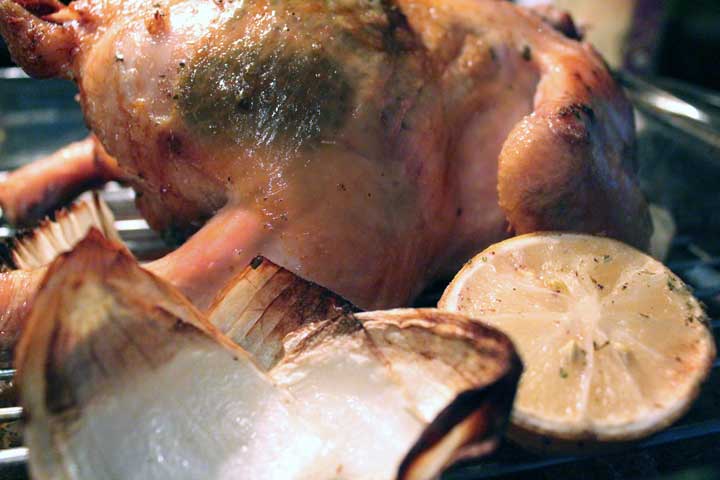
chicken dinnerIt’s always good to have a go-to chicken recipe, something that can be prepped quickly and shoved into the oven, something that will cook while you sit and unwind with a glass of wine, possibly watching old episodes of Sherlock or Doctor Who. Possibly. Insert geek love of your choice and swirl, sniff, and sip that lovely liquid while you immerse yourself in someone else’s imagination.

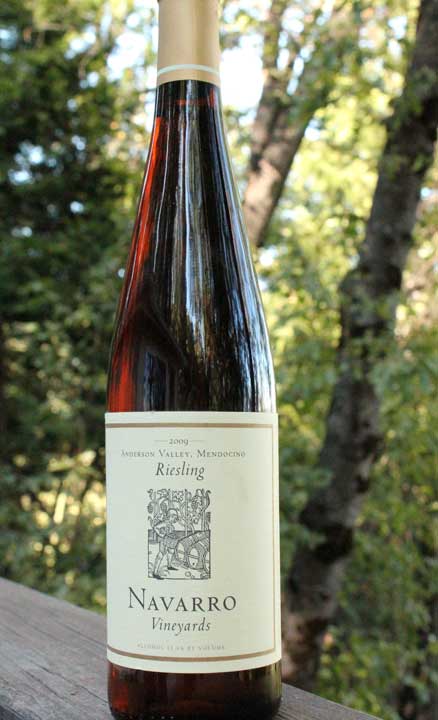
navarro rieslingAs far as the wine goes, you can’t go wrong with a glass of anything Navarro Vineyards and Winery has to offer. It was the very first wine club I ever belonged to, and I will continue to belong until the end of time or they retire, whichever comes first — hopefully, the end of time. Anderson Valley, one of my favorite places in the entire world, one of the places that truly feels like home, is the location of their vineyards. The region grows outstanding Alsace wines, and it’s beautiful, besides. (We belong to three other wine clubs whose homes are in the Anderson Valley. I can pretty much guarantee you’ll see an image of the other wines at some point or another.) The Riesling I paired with the chicken is a dry style and is perfect with the lemon and sage I used to flavor the dish, but it’s wonderful enough to drink alone, staring at Benedict Cumberbatch’s cheekbones or what have you.

Lemon Sage Chicken

1 whole, organic chicken
1 lemon
1 onion
2 teaspoons dried sage
1 teaspoon of salt
1 tablespoon butter
a pinch or two of red pepper flakes

Preheat oven to 325 degrees Fahrenheit.
Place chicken on a cooking rack set into a casserole dish.
Mix the seasonings and butter together. Roll the lemon on the counter, using your hand and a little bit of pressure, until it feels slightly squishy. Cut the lemon in half and squeeze the juice inside the chicken cavity. Rub some of the butter mixture inside the cavity. Carefully loosen the skin on the outside of the chicken, using your fingers to create pockets around the breast and thighs, then rub the rest of the butter mixture under the skin. Rub the outside of the chicken, ridding your fingers of any leftover butter mixture.
Insert the two halves of lemon inside the cavity. Cut onion into quarters and try to fit as much of it in the cavity as possible. Scatter any remaining onion pieces around the chicken, inside the dish.
Cook, breast side down, for an hour and 45 minutes. Flip the bird over and cook another 45 minutes.
Remove from oven and flip chicken back over, breast side down, and let rest for 15 minutes. Carve and serve.

Prosciutto Wrapped Figs

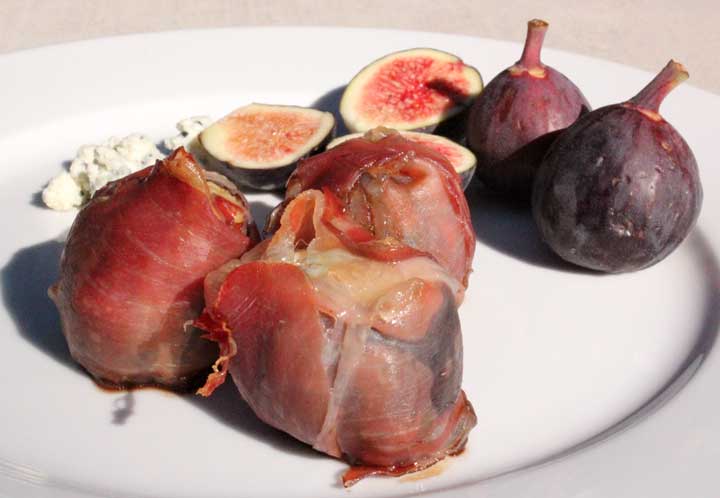
wrapped figsThere’s something so satisfying about the pop of fig seeds between the teeth. While the fruit cooked into cookies has become a household staple, the fig in its whole form still seems slightly exotic, even though it was one of the first plants to be cultivated by humans. Eating the whole fruit conjures images of the Roman aristocracy, being fanned as they reclined, popping ripe grapes and figs dripping in honey into their mouths.

When one adds the sensory satisfaction with the images of the toga-wearing rich, it’s no wonder that figs seem like a very decadent treat. While it’s all kinds of amazing in the mouth, making a sweet and savory fig finish is easy peasy, and is a lovely end to a dinner of wine, cheese, crackers, and tapenade.

sherryStuffed Figs Wrapped in Prosciutto

9 brown figs
3-4 tablespoons of crumbled blue cheese
9 pieces of prosciutto
drizzle of fig balsamic vinegar
drizzle of honey

Preheat oven to 400 degrees.
Cut the stem off of each fig and slice each fig in half. Grab a teaspoon or two of blue cheese, depending on the size of the fig, and put on the inside of one half of a cut fig. Take the other half and lightly smoosh the cheese inside. While holding the fig together, wrap in a piece of prosciutto. Place on a cookie sheet lined in parchment paper and repeat the stuffing/wrapping steps until all figs are on the sheet. Drizzle the figs with the balsamic vinegar and then follow with a drizzle of honey.
Place in the oven and cook 5-8 minutes, until prosciutto is slightly browned.

The only pairing that I found to work with the multiple levels of flavor was a sherry, specifically a beautiful cream sherry, Gonzalez Byass “Solera 1847.” We have really enjoyed this bottle, and while it may not be easy to see in the photo, there’s just enough left to pair with the figs. I guess it’s time to stop by the wine department.

  • Recent Posts

  • Archives

  • Categories

  • Meta