Kuri Squash and Bacon Soup

red-kuri-squash-soupFlu season is here, and I’ve already fallen prey to a strain that had me bedridden for most of a week. When I could eat again, I wanted something rich, filling, warm, and easy, as my stamina wasn’t back yet. Using my fab new technique to cook squash, I plopped in a couple of my favorite variety, Red Kuri, and took a nap.

Nap achieved, I had some beautifully cooked squash and no recipe bubbling up into my consciousness, so I did what every cook does when they want something but can’t find anything that quite satisfies the craving — I made it up. What was produced in my soup pot will be a dish I replicate quite often, as it was tasty with a capital T, and it was exactly what my recovering body needed.

Kuri Squash and Bacon Soup

serves four

2 Red Kuris, cooked, seeds and skin removed (If Kuris aren’t available, other winter squash, like sugar pie pumpkins or butternut, will work just fine.)
10 slices of bacon, cooked crispy and chopped
5 cups chicken stock
1 cup half and half
1 cup white wine (I used Chardonnay.)
Sriracha to taste (I used two healthy squeezes.)
2 teaspoons dried sage
salt and pepper to taste

Using a food processor, blend the squash and stock until smooth. You will need to do several batches so as not to overload the processor.
Dump in a soup pot and cook on medium heat until it begins to bubble. Add bacon, Sriracha, and sage. Stir well. Taste to see how much salt and pepper is needed and if you need to add more sage or Sriracha. Add wine and bring back to a slow simmer.
Pour in half and half and stir well. Taste once more to check and see if any final adjustments are needed. If all is to your liking, pour into bowls and enjoy.

Pairing notes: As I was recovering from the flu, I paired my soup with water. Another option would be using the wine that you used in the soup. Charles paired his bowl with a Pinot Noir and enjoyed it immensely.

A Successful Event

Owner Meeting 2013Well, the annual owner meeting for the store ended up being a rousing success, and the Cajun theme was mighty popular. All of the feedback I’ve had so far can be summed up like so: fun, good food, good wine, and a great night.

It’s wonderful to have this year’s event accomplished. I only have a smattering of photos, as once the doors opened, I was on bar duty, but believe me when I say that the venue was full and almost everyone was constantly smiling. And the big wine winner of the evening? Sobon, hands down. It was the most requested glass, and the most requested refill.

Of course, success doesn’t come without a price. I’ve woken up at 1:00 each morning this week, going over the lists of requirements until finally getting up to ready myself for the workday. At this point, my brain is pretty foggy and exhausted, but it was worth it. It was a pretty, festive, and fantastic evening. Now, however, I’m ready for a nap.

Braised Collards

Serves: 4

10 leaves (1 bunch) of collards
2 to 3 tablespoons olive oil
1/2 onion, cut in crescents
5 cloves garlic, minced
2 tablespoons water
1 tablespoon tamari
1 tablespoon mirin
A few drops of sherry vinegar

Wash greens carefully and remove stems. Chop leaves into bite-size pieces.
Heat a large skillet over medium heat. Add oil and onion. Sauté onion and garlic over low heat, stirring occasionally, until translucent and soft. Add collards and toss to coat with oil. Sauté over medium heat until leaves begin to turn brilliant green and wilt down.
Mix together water, tamari and mirin. Pour into pan. Cover pan tightly. Braise until leaves are tender, 5 to 8 minutes, adding 1 to 2 tablespoons of water if pan becomes dry. Taste to check for doneness; greens should be tasty, not bitter. Sprinkle with a few drops of vinegar before serving.

Winner Winner Chicken Dinner

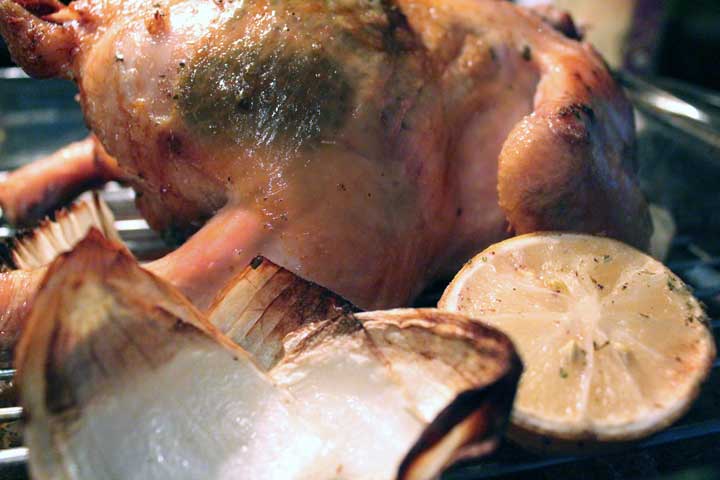
chicken dinnerIt’s always good to have a go-to chicken recipe, something that can be prepped quickly and shoved into the oven, something that will cook while you sit and unwind with a glass of wine, possibly watching old episodes of Sherlock or Doctor Who. Possibly. Insert geek love of your choice and swirl, sniff, and sip that lovely liquid while you immerse yourself in someone else’s imagination.

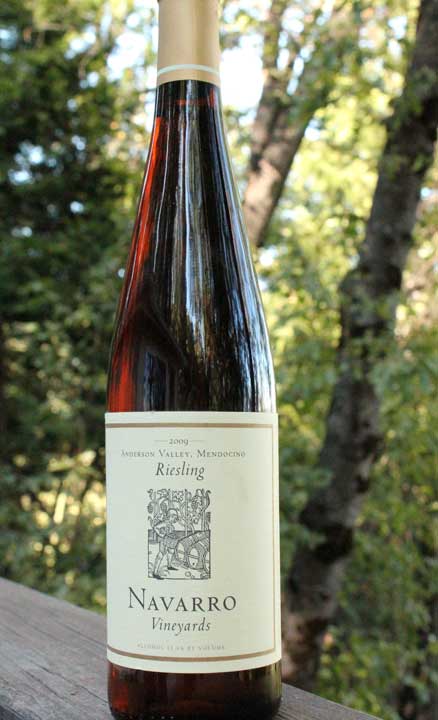
navarro rieslingAs far as the wine goes, you can’t go wrong with a glass of anything Navarro Vineyards and Winery has to offer. It was the very first wine club I ever belonged to, and I will continue to belong until the end of time or they retire, whichever comes first — hopefully, the end of time. Anderson Valley, one of my favorite places in the entire world, one of the places that truly feels like home, is the location of their vineyards. The region grows outstanding Alsace wines, and it’s beautiful, besides. (We belong to three other wine clubs whose homes are in the Anderson Valley. I can pretty much guarantee you’ll see an image of the other wines at some point or another.) The Riesling I paired with the chicken is a dry style and is perfect with the lemon and sage I used to flavor the dish, but it’s wonderful enough to drink alone, staring at Benedict Cumberbatch’s cheekbones or what have you.

Lemon Sage Chicken

1 whole, organic chicken
1 lemon
1 onion
2 teaspoons dried sage
1 teaspoon of salt
1 tablespoon butter
a pinch or two of red pepper flakes

Preheat oven to 325 degrees Fahrenheit.
Place chicken on a cooking rack set into a casserole dish.
Mix the seasonings and butter together. Roll the lemon on the counter, using your hand and a little bit of pressure, until it feels slightly squishy. Cut the lemon in half and squeeze the juice inside the chicken cavity. Rub some of the butter mixture inside the cavity. Carefully loosen the skin on the outside of the chicken, using your fingers to create pockets around the breast and thighs, then rub the rest of the butter mixture under the skin. Rub the outside of the chicken, ridding your fingers of any leftover butter mixture.
Insert the two halves of lemon inside the cavity. Cut onion into quarters and try to fit as much of it in the cavity as possible. Scatter any remaining onion pieces around the chicken, inside the dish.
Cook, breast side down, for an hour and 45 minutes. Flip the bird over and cook another 45 minutes.
Remove from oven and flip chicken back over, breast side down, and let rest for 15 minutes. Carve and serve.

Prosciutto Wrapped Figs

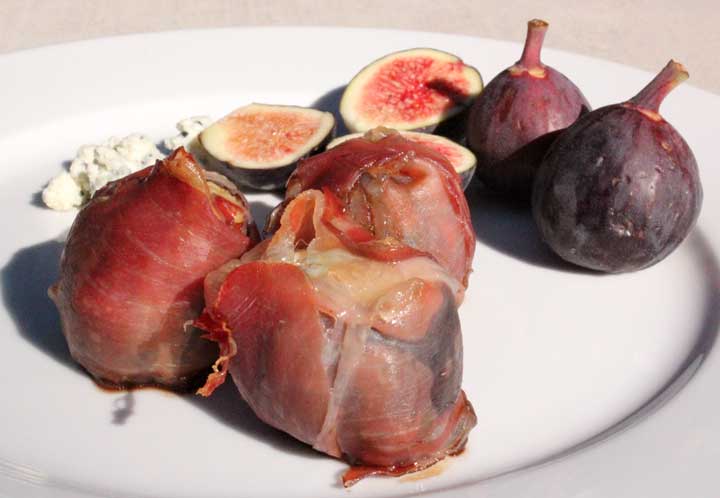
wrapped figsThere’s something so satisfying about the pop of fig seeds between the teeth. While the fruit cooked into cookies has become a household staple, the fig in its whole form still seems slightly exotic, even though it was one of the first plants to be cultivated by humans. Eating the whole fruit conjures images of the Roman aristocracy, being fanned as they reclined, popping ripe grapes and figs dripping in honey into their mouths.

When one adds the sensory satisfaction with the images of the toga-wearing rich, it’s no wonder that figs seem like a very decadent treat. While it’s all kinds of amazing in the mouth, making a sweet and savory fig finish is easy peasy, and is a lovely end to a dinner of wine, cheese, crackers, and tapenade.

sherryStuffed Figs Wrapped in Prosciutto

9 brown figs
3-4 tablespoons of crumbled blue cheese
9 pieces of prosciutto
drizzle of fig balsamic vinegar
drizzle of honey

Preheat oven to 400 degrees.
Cut the stem off of each fig and slice each fig in half. Grab a teaspoon or two of blue cheese, depending on the size of the fig, and put on the inside of one half of a cut fig. Take the other half and lightly smoosh the cheese inside. While holding the fig together, wrap in a piece of prosciutto. Place on a cookie sheet lined in parchment paper and repeat the stuffing/wrapping steps until all figs are on the sheet. Drizzle the figs with the balsamic vinegar and then follow with a drizzle of honey.
Place in the oven and cook 5-8 minutes, until prosciutto is slightly browned.

The only pairing that I found to work with the multiple levels of flavor was a sherry, specifically a beautiful cream sherry, Gonzalez Byass “Solera 1847.” We have really enjoyed this bottle, and while it may not be easy to see in the photo, there’s just enough left to pair with the figs. I guess it’s time to stop by the wine department.

Smoky Times Call for Smoky Measures

prawnsSmoke. Fumé. Humo. Rauchen. Deatach. Ysmygu. We’re surrounded by smoke in my neck of the woods from two separate fires. It’s all we’ve talked about at work this week. It’s at the forefront of our thoughts, as our lungs won’t allow us to forget.

Since playing with words is one of my pastimes, and wine is my passion, it’s no surprise that the constant swirling of my atmosphere made me think of Fumé Blanc.

Robert Mondavi invented the term for his Sauvignon Blanc styled after the Pouilly-Fumé wine of the Loire Valley. Choosing the new moniker helped to differentiate his drier style from the sweeter Sauvignon Blancs of the late 1960s. And the rest, as you well know, is history.

Those aren't clouds in the background. It's smoke.

Those aren’t clouds in the background. It’s smoke.

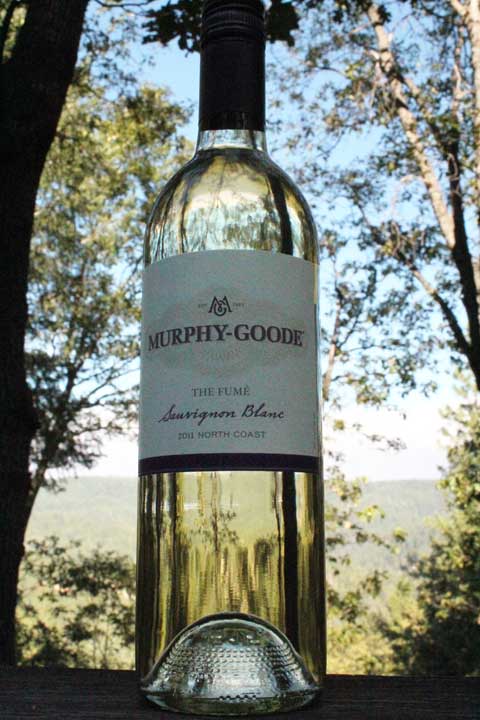
I landed on Murphy-Goode’s The Fumé. It was staring out at me from the shelf in quite an alluring fashion. I then read the label’s pairing suggestions and decided that coconut prawns would be the correct choice of cuisine.

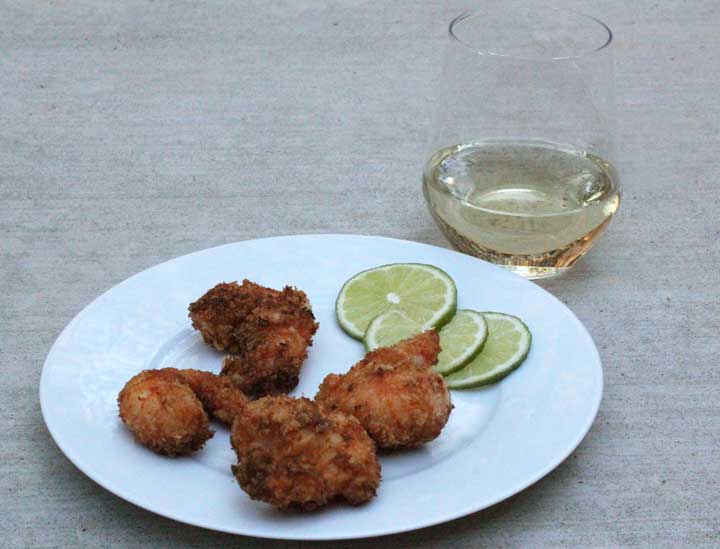
It was a delightful decision. The tropical notes of mango in the wine married nicely to the coconut batter of the prawns. The creaminess of the Fumé went hand-in-hand with the richness of the shrimp, and the sprinkling of lime that the dish received after cooking brought out key lime pie characteristics in the glass. Smoky, silky, with hints of melon — to sum up the wine succinctly, well, it was yummy, and it made for a damn good(e) dinner.

Coconut Prawns

Organic canola oil for frying
1/4 cup Kinnikinnick gluten-free bread crumbs
1/2 teaspoon salt
drizzle of sriracha
1 lime
1 cup shredded coconut
2 egg whites
1 pound prawns, deveined and peeled

Heat two inches of oil over medium high heat.
Combine bread crumbs with coconut and mix thoroughly.
Salt prawns. Add sriracha and mix until coated.
Lightly beat the egg whites. Dip prawns in the egg, coat with the coconut mixture, and drop into the hot oil.
Flip prawns over when the batter has turned a dark, golden brown.
Serve with lime wedges and the ever-so-awesome Murphy-Goode The Fumé.

Salmon Run

salmonSalmon, you crazy omega-3 filled food, you! Why must you be so very, very expensive?

Because of the price, salmon is a rare treat for us. I mean, I can usually get filet mignon for less, but when the mood strikes and the wallet is feeling a wee bit fatter than usual, a fresh salmon steak from the fish case is where it’s at.

When cooking – and when pairing with wine – treat salmon as you would a steak from a roly poly, grass-fed cow. My favorite method is to get the cast iron skillet crankin’ hot, rub the filets with Cajun spices, and sear those bad boys until they’re tender and just-cooked-through. Depending on thickness, the average I’ve found is about three minutes per side, with a deep lid placed over the top to trap in a bit more heat and moisture.

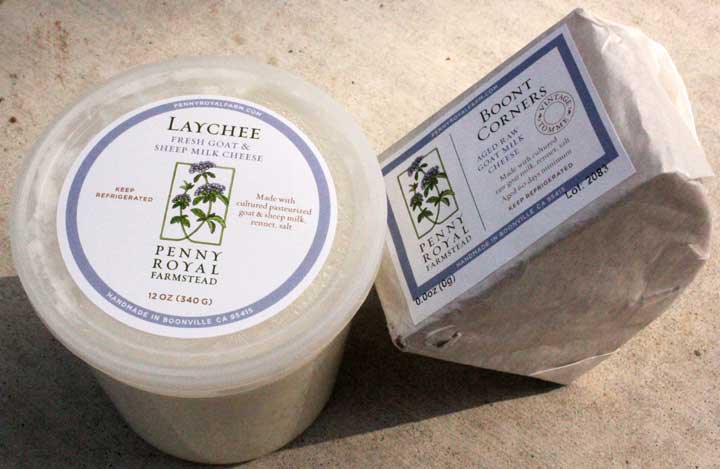
Place that pink wonder on a bed of risotto and drizzle with Larrupin Dill Sauce – the obvious and best choice of sauce for salmon. Since I had a teensy bit of Laychee left over after the manicotti mania, I placed the final dollops on top of each filet.

Accompanied by some broccoli rabe that had been drizzled with olive oil and dusted with parmesan and garlic and left under the broiler while the fish cooked, dinner was served, the combination of ingredients so perfect, I had more energy after eating than before. Don’t you love it when that happens?

The Cheese Can Stand Alone

Penny Royal FarmsteadSometimes I’m so grateful I’m a supertaster. I want to scream, “Thank you!” at the heavens and do cartwheels.

When I received my first shipment of my Farm to Table program from Pennyroyal Farm, I was blessing each and every taste bud clustered on my tongue.

Charles and I had first gotten the opportunity to sample Pennyroyal’s cheese at the Alsace Festival in Anderson Valley. I could honestly say that I’ve never sampled a more glorious cheese. I was hooked. My need would not be assuaged, so I signed up to have the farm’s creations sent to my door five times a year.

The spring shipment arrived on Thursday, and I instantly grabbed a spoon to try the Laychee. Sweet, salty, slightly tangy and ever-so dreamy creamy, one bite and I knew this cheese had to be the main focus of any dish of which it was a part. That spoonful made my stomach dance with butterflies of pleasure, like the way you felt in third grade when that cute boy with the mop of brown hair looked at you with his azure blue eyes. That first spoonful was like that, except in cheese form.

manicottiTo showcase my new found Laychee love, I decided to make a manicotti dish, but instead of using the traditional ingredients of spinach, nutmeg, pepper, and meat as well as cheese, I just stuffed the pasta with Laychee. I then poured tomato sauce on top and baked the concoction in the oven at 350 degrees F for 45 minutes.

Topped with some Boont Corners, grated finely, before serving and paired with a pinot noir, this ended up being a spectacular way to celebrate my very first cheese shipment. It’s going to be a very long wait for the next one. Until then, I’ll content myself with the final cheese in the first batch — a lovely blue that we’re slowly savoring, paired with almonds and a small glass of tawny port each evening we feel like having a special treat.

Freezing Meals

When planning meals in advance, your freezer becomes your best friend. Foods like casseroles, lasagnas, and soups can be prepared ahead of time, frozen, and then moved to the refrigerator the night before the dish will be reheated.

When prepping foods for the freezer, where do you start? Airtight seals are a must in order to prevent freezer burn. Casserole dishes that come with seal-able lids are a good choice as well as containers with lids that can be pushed down to squeeze out the extra air. Freezer bags are also a great option – just make sure to empty it of as much air as possible before sealing.

Don’t feel limited to dinner foods when planning meals. Cooked pancakes freeze nicely and are a snap to reheat. Cook home style potatoes or hash browns and freeze them for a quick side dish for breakfast or even brinner – breakfast for dinner.

When getting soup ready to be set back, cook, then let cool. Pour into airtight containers, leaving an inch or so for expansion. To prevent freezer burn, place a sheet of plastic wrap on top of the soup before putting on the lid.

Meat freezes wonderfully as does bread and rice. When contemplating fruits and vegetables for freezer habitation, think about the water content. If they’re watery, like melons, lettuce, or cucumbers, they probably won’t freeze well. Other types of produce will soften, so it’s best to use them in cooked foods or smoothies.

Speaking of smoothies, those brown bananas that usually go to the compost heap make wonderful drinks. Cut them into slices and freeze in bags. They’re a great base for other fruits, juice, and yogurt, and they’ll make your smoothie smoother and sweeter without needing to add anything extra, like honey.

Organizing foods by preparing them ahead of time will save you last minute trips to the grocery store as well as meal time stress. A little planning and freezer prep will help make your kitchen a peaceful oasis.

Quick freezer use-by dates for quality:
•    Bread – use within a month.
•    Fruits and Vegetables – three to six months
•    Soups – three to six months
•    Casseroles – use within a month

Freezer Tomato Sauce

1/2 cup extra-virgin olive oil
1 small organic yellow onion, finely chopped
3 organic garlic cloves, finely chopped
2 tsp sea salt
1/2 tsp freshly ground black pepper
2 tsp red pepper flakes
2 tsp dried oregano
2 dried bay leaves
5 leaves fresh organic basil, chiffonade or torn
2 (32-ounce) cans or about 15 fresh and blanched, organic crushed roma tomatoes
Additional salt & pepper to taste
1/2 to 3/4 cup chicken or vegetable stock

In large heavy pot, heat the olive oil over medium-high heat. Add the onion. Sauté for about 5 minutes, or until the onion is slightly translucent. Add the garlic, salt, and pepper and sauté another 3 to 5 minutes or until the onion is translucent and the veggies are tender, being careful not to brown the garlic.

Add in the tomatoes, bay leaves, basil, oregano, and red pepper flakes. Simmer, uncovered, over a low heat until the sauce thickens, about 1 to 2 hours, checking the seasonings occasionally. When the sauce has thickened, remove from heat and let cool slightly. Remove the bay leaves. Working in batches, puree the sauce in a food processor or blender until smooth.
Pour into airtight containers and freeze for up to one month or refrigerate for up to one week.

When ready to use:
Allow the sauce to defrost overnight in the refrigerator. Put sauce in a large pot over medium heat. Add the stock to thin the sauce out to the desired consistency. Taste and add more salt and pepper if necessary. Heat through and serve with your favorite pasta.

I Can Never Get Enough Tomatoes

The intense heat of summer may feel overwhelming at times, but without it, those luscious, red orbs of tomato-y goodness would not exist.

Of course, even one plant can create a ton of fruit, and man can only eat so many tomato sandwiches. This recipe is sure to jump-start your cooking creativity.

Rustic, Creamy Tomato Sauce

Serves 4-6

2 pounds slicing tomatoes
2 jalapeños
2 tablespoons olive oil
1 onion, diced
3 cloves garlic, minced
1 cup chicken stock
2 teaspoons salt
1/4 cup crème fraiche

Preheat broiler. Set rack about 5 to 6 inches from heat. Cut tomatoes and jalapenos in half. Place them on a baking pan. Broil on both sides until tomatoes are lightly charred and skins are wrinkled and peeling off, approximately 5 to 7 minutes per side. Use tongs to rotate. Jalapenos will blacken and brown as well, and shrink down.

Let cool, then peel and coarsely chop tomatoes, saving juice. Remove seeds and stem, and coarsely chop the jalapenos and set aside with tomatoes.

While tomatoes and jalapenos are cooling, sauté onion in 1 tablespoon oil in a sauce pan or cast iron skillet until very soft and lightly browned. Add garlic and cook for another minute Add onion-garlic mixture to tomato-jalapeno mixture along with salt, and puree well in a food processor or blender.

In same pan, heat 1 more tablespoon oil to very hot. Add puree to pan (it should sizzle and bubble) and cook for about 5 minutes. Stir continuously. Warning: it may splatter as well. Stir in stock and return to a boil, then lower heat and simmer for about 15 minutes, uncovered or until sauce begins to thicken.

Remove from heat and stir in crème fraiche. Season with more salt if necessary.

Amazing served over polenta.

Cheesy Tomatoes

Though it’s not quite time for tomatoes, the full-speed-ahead-to-summer temperatures are making me crave them.

This is a recipe that I’ve made for the past two summers, and every time I make it, I wonder why I don’t have it for dinner more often.

Cheesy Tomatoes Love Herbs

Serves: 4

1/2 cup bread crumbs
salt and pepper to taste
1/2 teaspoon water
1 egg
1 package 8 oz Sierra Nevada Cheese Company Chevre, made into four rounds
4 very thick slices of fresh tomato (heirloom or slicing)
2 teaspoons extra virgin olive oil, plus a drizzle for dressing
1 small head of curly endive (or frisée)
1 bunch cilantro (or you could use fresh basil)
1 bunch wrinkled cress (or you could use radicchio)
drizzle of red wine vinegar (If you use the basil & radicchio, use balsamic vinegar instead.)

Mix breadcrumbs, salt, and pepper in a small bowl. Add water and work until crumbly.

Beat egg is a small bowl. Dip Chevre rounds in the egg and then the bread crumbs. Place in fridge for 15 minutes.

Place tomatoes on plate and sprinkle with salt and pepper.

Add olive oil to a skillet and heat on med/high until the oil is hot but not burning. Carefully place the Chevre rounds in the oil and cook 45 seconds, then flip and repeat. Place rounds on tomatoes.

Toss greens with the drizzles of red wine vinegar and olive oil. Add a little seasoning if desired. Heap 1/4 of the greens on each tomato slice, and voila!

  • Recent Posts

  • Archives

  • Categories

  • Meta