Salmon Run

salmonSalmon, you crazy omega-3 filled food, you! Why must you be so very, very expensive?

Because of the price, salmon is a rare treat for us. I mean, I can usually get filet mignon for less, but when the mood strikes and the wallet is feeling a wee bit fatter than usual, a fresh salmon steak from the fish case is where it’s at.

When cooking – and when pairing with wine – treat salmon as you would a steak from a roly poly, grass-fed cow. My favorite method is to get the cast iron skillet crankin’ hot, rub the filets with Cajun spices, and sear those bad boys until they’re tender and just-cooked-through. Depending on thickness, the average I’ve found is about three minutes per side, with a deep lid placed over the top to trap in a bit more heat and moisture.

Place that pink wonder on a bed of risotto and drizzle with Larrupin Dill Sauce – the obvious and best choice of sauce for salmon. Since I had a teensy bit of Laychee left over after the manicotti mania, I placed the final dollops on top of each filet.

Accompanied by some broccoli rabe that had been drizzled with olive oil and dusted with parmesan and garlic and left under the broiler while the fish cooked, dinner was served, the combination of ingredients so perfect, I had more energy after eating than before. Don’t you love it when that happens?

The Cheese Can Stand Alone

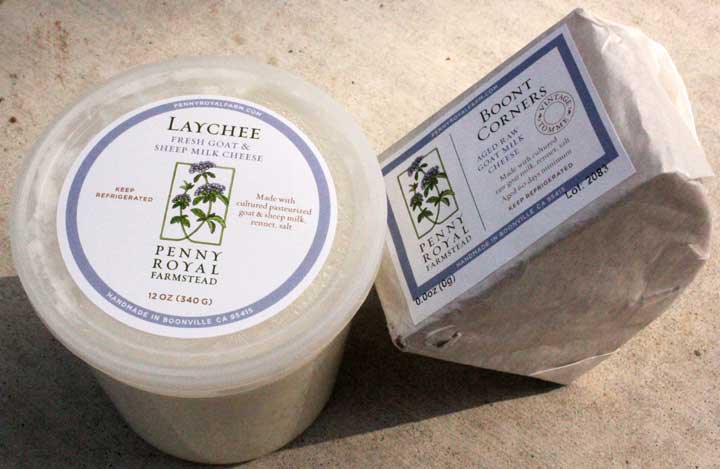
Penny Royal FarmsteadSometimes I’m so grateful I’m a supertaster. I want to scream, “Thank you!” at the heavens and do cartwheels.

When I received my first shipment of my Farm to Table program from Pennyroyal Farm, I was blessing each and every taste bud clustered on my tongue.

Charles and I had first gotten the opportunity to sample Pennyroyal’s cheese at the Alsace Festival in Anderson Valley. I could honestly say that I’ve never sampled a more glorious cheese. I was hooked. My need would not be assuaged, so I signed up to have the farm’s creations sent to my door five times a year.

The spring shipment arrived on Thursday, and I instantly grabbed a spoon to try the Laychee. Sweet, salty, slightly tangy and ever-so dreamy creamy, one bite and I knew this cheese had to be the main focus of any dish of which it was a part. That spoonful made my stomach dance with butterflies of pleasure, like the way you felt in third grade when that cute boy with the mop of brown hair looked at you with his azure blue eyes. That first spoonful was like that, except in cheese form.

manicottiTo showcase my new found Laychee love, I decided to make a manicotti dish, but instead of using the traditional ingredients of spinach, nutmeg, pepper, and meat as well as cheese, I just stuffed the pasta with Laychee. I then poured tomato sauce on top and baked the concoction in the oven at 350 degrees F for 45 minutes.

Topped with some Boont Corners, grated finely, before serving and paired with a pinot noir, this ended up being a spectacular way to celebrate my very first cheese shipment. It’s going to be a very long wait for the next one. Until then, I’ll content myself with the final cheese in the first batch — a lovely blue that we’re slowly savoring, paired with almonds and a small glass of tawny port each evening we feel like having a special treat.

Slow Cooker Roast Beef

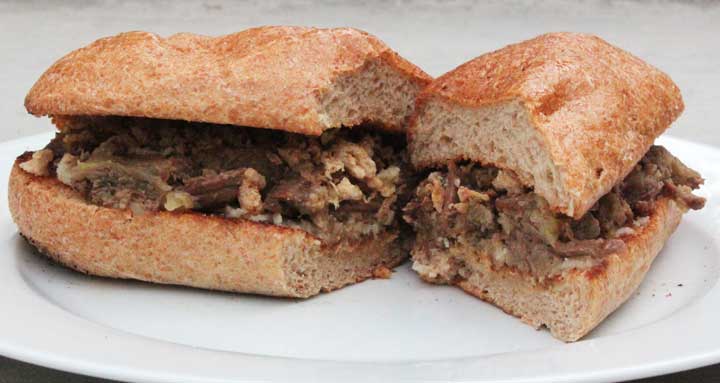
roast beef sandwichI work full time, as many of you do, and I’ve found that one of my best friends on a busy day is my slow cooker.

When it’s slow cooking beef, I’ve found another friend — Mr. Sauerkraut.

Mr. Sauerkraut does an awesome job of breaking down a tougher cut of meat during the day and creating a tender, flavorful star for a sandwich.

A couple of days ago, I was poking around in the freezer, trying to find inspiration for dinner. I found a flank steak from my meat CSA. A few days before, I had made a simple meal of sausage, potatoes, and sauerkraut and had picked up an extra package of the fermented wonder. (Just like other condiments, I find it’s good to have an extra package of sauerkraut hanging out in the fridge for last-minute meal ideas.)

Knowing that a tender roast beef sandwich was only a crock pot away, I allowed the steak to defrost in the fridge overnight and then tossed it into the slow cooker with the entire package of sauerkraut, turned it onto low, and left for work.

When I got home that evening, I drained the beef in a metal colander while browning a roll of whole wheat French bread on the cast iron skillet. While the bread browned, I put together a simple salad of tender baby greens of chard, kale, and spinach and threw on some grape tomatoes and avocado for good measure.

Once the bread was ready, I smeared a healthy layer of horseradish on the roll, and dinner was served. We were chowing down with a nice barleywine to drink within a half hour of arriving from work. What could be simpler?

Symphony of the Soil

Symphony of the SoilSymphony of the Soil” is the perfect way to end this year’s Friday Food Film series. Without soil, there is no life – soil is that thin layer where life is possible.

The miracle of how all things on this planet exist is presented in a journey of how soil forms, from glaciers wearing rock down to a mineral sludge that flows into the sea, to sphagnum moss, to sand, the film explores the trifecta that allows us to feed ourselves.

Beautifully shot with sweeping images, “Symphony of the Soil” allows you to marvel at the complexity of our world as well as gifting you to travel virtually to Wales, Hawaii, Egypt, India, and more.

As someone who is rather in love with geology, this film was a treat. Even if studying rocks isn’t your jive, “Symphony” is fascinating and easy to watch with animated watercolors prettily explaining how healthy soil functions and grows.

It’s a little too easy to take soil for granted. It’s integral to our existence, but it dwells beneath our feet. The film does an amazing job of allowing soil to be the star of the show. We’re shown how we treated it in the past, how we’ve misused it, and how we’re beginning to respect it once again.

The health of our soil is not only the health of our ecology, but our health as well. Only by learning how to treat it as the living organism that it truly is will we be able to heal our planet and create a system that allows all life – including the gigantic number of human beings – to thrive.

In Organic We Trust

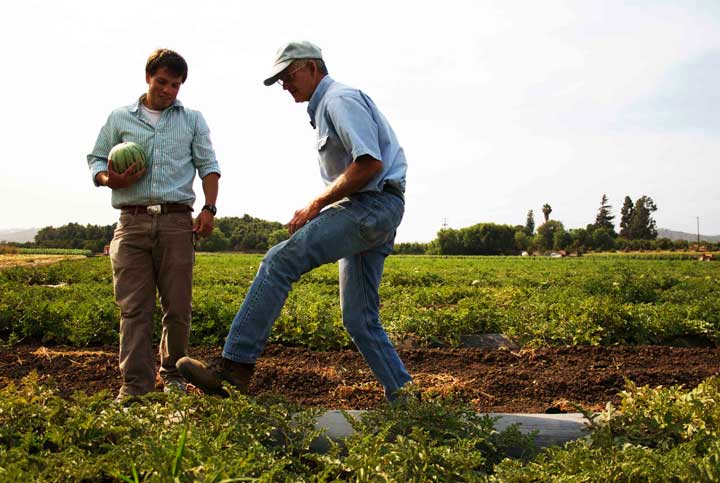
In Organic We Trust Watermelon FarmIn Organic We Trust” begins with a montage of produce and organic processed foods. Kip Pastor, the film’s writer and director, then takes the viewer on an organic journey, exploring the truth behind organic food.

Peppered with interesting statistics, such as 73 percent of Americans eat at least some organic food, “Trust” is interesting as well as fun.

Even working in organic foods for as long as I have, I can attest to how confusing some aspects can be, and Pastor does a terrific job of laying out the specifics to what is required to become certified, what the value of organic certification is, and the philosophies that motivate organic farmers.

From government regulations and the disinterest of the USDA to communicate with the public to the corporate organic movement (organics have become profitable and big ag wants in), what could have been just a dry presentation of facts – did you know that to be certified, a farm is required to have a three year transition? – becomes personal and intriguing as the filmmaker tells the story of many organic farmers and farms including such stars as Full Belly Farm, Knoll Farms, and Sierra Orchards.

The world of organic foods is complex, something Pastor discovered as he explored the motivations behind those organic cookies on the shelf, but by the end of the film, both he and the audience have rediscovered the importance of an industry that’s less than one percent of total agriculture.

By embracing the philosophies behind organics, as well as supporting movements like Slow Food USA, local food, farmers markets, and urban farming, we as consumers are staying in control of what we put in our bodies as well as contributing to a more sustainable future. Pastor learns that organics is much more than pesticide-free food. It also means cleaner water, more efficient use of energy, and a healthier climate. By becoming educated about what he eats and not just blindly trusting a word, his understanding becomes just as well rounded as his meals.

Greening the Revolution

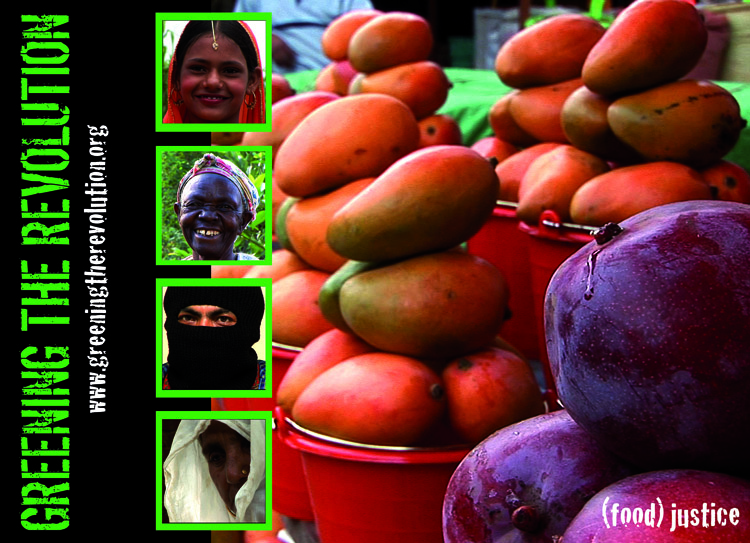
Greening the RevolutionGreening the Revolution” begins with a very compelling quote, “Why are some people eating and some are not in a world of plenty?”

Backed by an international soundtrack representing the countries on the screen, the film looks at how NAFTA and the “Green Revolution” have changed the way food is viewed in the world.

From mud cakes used to fight off the gnawing effects of hunger in Haiti, people working themselves to death farming in Mexico, to a spokesperson for Monsanto talking about how exciting it is to be in agriculture in this period of our history, the film adeptly focuses on the myriad of issues involving food in the present day global economy.

While a representative of the World Bank speaks of how she knows of no one who feels that globalization is anything but positive, we’re faced with scenes of impoverished farmers, women forced into prostitution in order to feed their children, and sky rocketing food prices.

At the Pine Ridge Reservation in South Dakota, where the slaughter of the buffalo led to a dependency on processed food allocated by the government, half of the population over 40 has diabetes.

“Globalization fosters food insecurity on many levels, not just starvation,” said a tribal representative.

People all over the globe are experiencing that food insecurity. An Iowa farmer’s business folded after his pigs – that were fed GMO corn – had reproductive issues. 80 percent of his sow herd was unable to get pregnant. Farmers in India are committing suicide in record numbers – 250,000 have died so far – because of the debt incurred by growing GMO crops and the vicious cycle of dependency that stems from that use. Farmers drink the pesticide or herbicide that caused their debt.

“The ‘Green Revolution’ is directly responsible for my son’s death,” said a grieving father.

The film also explores the issue of speculation in commodity markets and how that caused the food crisis of 2008 where corporations saw record profits while people starved.

History has shown that this type of treatment cannot continue. The people will rise up and fight for their food rights, and therein lies the hope for the future. Not only are we living in a global economy, we’re also living in a global culture, one that can rise up together. There is now a worldwide movement for farmers to unite and take back their land. Corporations like Monsanto, as well as the WTO and NAFTA, may not be the highest powers forever, but it will be a global grassroots effort that’s needed to change that.

“Greening the Revolution” plays in BriarPatch Co-op’s Community Room on Friday, February 8 at 7:00 p.m. It’s free and open to the public.

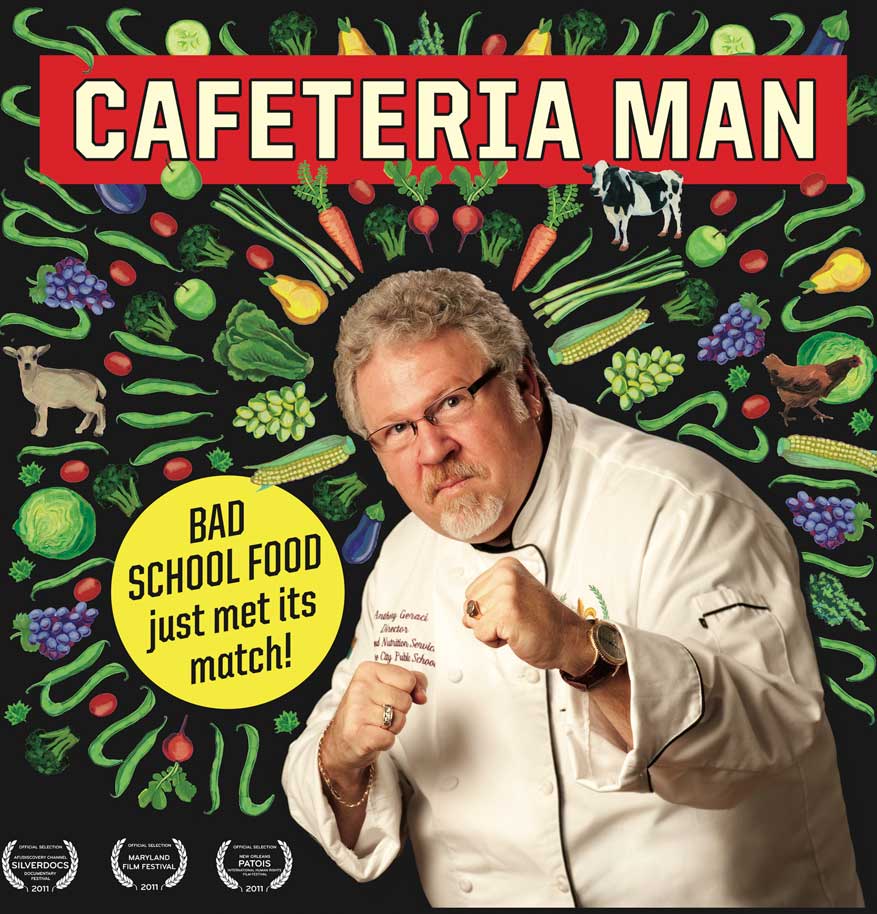
Cafeteria Man

CafeteriaManEach year, I track down food films to be shown at the food co-op in which I work. Each year, I’m guided by the choices of SYRCL’s Wild and Scenic Film Festival, but in previous years, I discovered many films on my own. This year, I was incredibly lucky because Wild and Scenic screened some amazing food films, so I was able to just follow suit.

Our first screening, on February 1, actually won the award for Best of Festival. “Cafeteria Man” deserved the honor.

Frustrated by the pre-plated, packaged, and highly processed foods with which the cafeteria presented them each day, a group of school children took it upon themselves to share the food with school administration. That moxie inspired a change in the way the Baltimore School System viewed their food program, and Tony Geraci was hired as the Food and Nutrition Director.

Geraci made sweeping changes to the food system, introducing fresh produce, freshly cooked meals, and sourcing food as locally as possible. He involved the students in learning how food is grown, how to prepare it, and how to serve it.

The empowerment and wonder on children’s faces as they taste food freshly picked from the soil is reason enough to watch the film. Witnessing their joy when they get to eat the food they’ve prepared is another.

“I can’t believe we made the salsa,” said one boy, his face beaming with pride. “It tastes like professional people made it.”

Geraci is another major reason to watch “Cafeteria Man.” He’s passionate. It’s easy to identify with him. He wants to make change. He wants that change to happen now. Just like most of us, he’s frustrated with being forced to wade through the muck of bureaucratic requirements.

When asked what his greatest challenge is, Geraci answers, “The adults – that’s the hardest part of my job.”

And he’s endearing. The job means so much to him, he’s possessed by it. It’s apparent that Geraci feels that kids deserve to experience real food.

“We need to start treating our kids like the clients that they are,” he says at a convention for the Baltimore school food workers.

“The jobs that we have are because of our kids,” he reminds everyone.

Through helping children receive one of their most fundamental needs, real food, Geraci sees himself helping the future. He sees it as a way to help the city heal itself, using food as the vehicle.

There is still a long way to go in terms of guaranteeing quality meals for school children across the country, but after watching “Cafeteria Man,” you’ll be filled with the hope and inspiration needed to keep the momentum going.

Eating Winchester

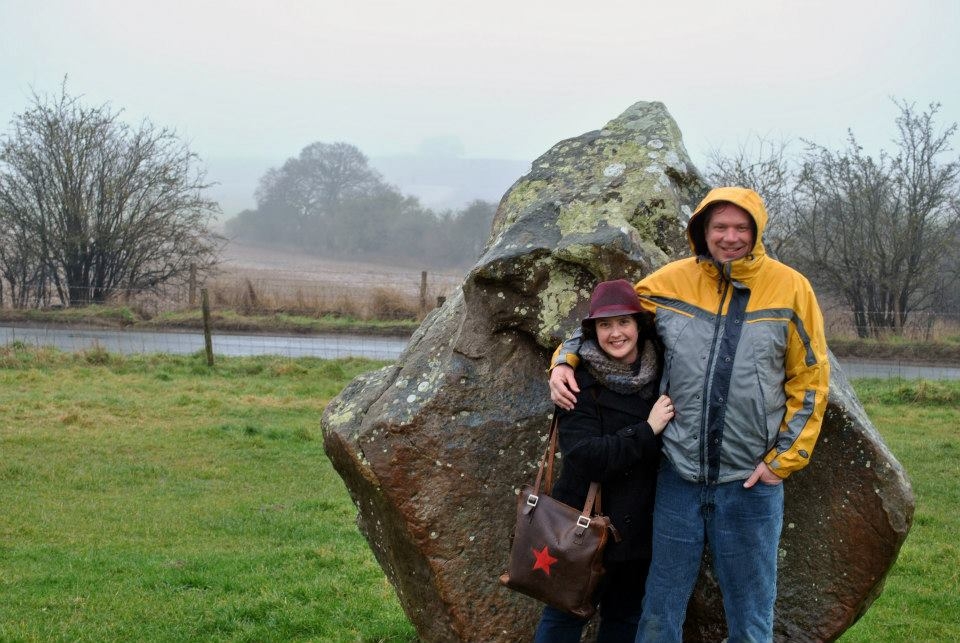
Avebury

The skies were dreary and overcast. My wool pea coat was a must and was destined to be drenched multiple times. A pub and a pint by a crackling fire beckoned, but I was on a gastronomic mission – to eat at as many great restaurants in Winchester as possible.

We were visiting my sister, a recent Masters graduate from the Winchester School of Art. People had made fun of our culinary pursuits while in England – don’t they boil everything? – but we persevered and were rewarded with a week’s worth of wonderful meals. Winchester is actually a hub of a town with a teeming culture.

To begin our eatery extravaganza, we did in fact choose a pub. We were in England after all! At the Royal Oak, I opted for the Fish & Chips, and I was not disappointed. The haddock had wonderful flavor, the batter light and crunchy. The serving was huge – too much to consume in one sitting. The only unfortunate aspect was that it was presented on a wooden tray that had obviously been abused with frequent washing. (I was also not a fan of mushy peas, sorry!)

Trying Indian food was a must. I grew up in Yuba City (it’s often referred to as “Little India” because of the large Sikh population), which means that I also grew up with Indian cuisine, and I was curious to experience the differences – if any – from across the pond. The waiter didn’t believe that I could handle the spice in my meal, I ordered madras, but I could have handled more. We shared some lovely garlic naan and a bottle of Riesling for a very satisfying meal.

At Rimjhim, we waited – and waited – for the bill. We had encountered the lovely, non-pushy restaurant culture in Great Britain. They’ll let you sit there for hours if you don’t tell them you’d like the bill that last time the waiter or waitress stops by and asks if you’d like anything else. (When we ended up wanting dessert at another place after our meal, we had to practically pounce on a member of the staff in order to procure our bill.) After being left alone for what seemed like an eternity, we finally walked up to the register.

With traditional pub food and Indian out of the way, the next stop on our culinary journey was, of course, Italian. Zizzi was a bit haughty, and they sat our riffraff selves in a corner behind a life-sized statue of a horse, but my Ravioli Di Capra was divine, and the Barbera De Asti Superiore 2010 D.O.C.G., Chiarlo Piemonte was quite lovely with the food. It did sport more than a touch of Brett, to which I’m very sensitive (I think it tastes like Band-Aids), so it wasn’t my favorite, though that Brettanomyces, along with its restrained mineral characteristics, made it very European.

On our last day, we kept it Mediterranean and headed to Spain. El Sabio had a wonderful assortment of tapas. My choice of three dishes, Croquetas De Setas y Queso de Cabrales, Ensalada Mixta, and Albóndigas en Salsa de Tomate were perfect and packed with flavor. We shared a bottle of Tempranillo, Marqués de Verdellano for a very easy-going, and very filling, lunch.

I think our favorite stop of all was The Black Bottle – not a restaurant, though they do offer food, but rather a wine bar. With a card that had been charged from money given at the register, you could choose wine by the glass in 125 ml, 175 ml, or taste sizes. I had a grand time skipping around and sampling various wines from the automated dispensers until I happened upon my favorite, Masseria Pietrosa Malvasia Nera, and had a glass. I love it and am hoping to find a distributor here in the States. Thank goodness I live with a wine buyer!

All in all, our gastronomic tour of Winchester was a rousing success. We had a wonderful experience, and with all of the walking we did, I managed not to gain any weight, so, WIN!

Blue Diamond

photo from Blue Diamond

photo from Blue Diamond

In spring, California’s valley is blanketed in a glory of orchards in bloom. Soft, white petals flutter overhead and cover the ground, turning it downy and fragrant.

That promise of almonds is an integral part of springtime in the valley, but where do those almonds end up once they’ve matured?

One destination is a grower-owned co-op, Blue Diamond Growers headquartered in Sacramento. Blue Diamond has been in the business of almonds for 102 years and has become the world’s largest tree nut processing and marketing company. As well as marketing to all 50 states, the business also sells to many other countries and is the sixth largest U.S. food export.

Blue Diamond has been groundbreaking in many areas, calling themselves the “first name in almonds.” They were the first grower-owned cooperative for marketing almonds, the first to develop a market for California almonds in over 90 countries, and much more.

In 1909, an almond grower from the Lodi area named, J. P. Dargitz, first promoted a concept of a statewide almond marketing association. The next year, nine grower groups formed the California Almond Growers Exchange (CAGE). In 1911, a branded consumer package was proposed, and the Blue Diamond consumer business was born. The grower-owned co-op continued to flourish throughout the 20th century.

In 2000, Blue Diamond’s nut line was expanded when MacFarms, a macadamia producer from Hawaii, was purchased. 2010 found California almond crops averaging 1.5 billion pounds – double what they had been a decade ago and 80 percent of the world’s almond supply. The supply barely kept up with the world’s demand. Blue Diamond expanded its range of products, sending almonds past peanuts as the world’s top ingredient nut.

As the health benefits of almonds continue to be discovered – the Los Angeles Times stated that almonds are a good source of vitamin E, protein, fiber, and magnesium as well having been found to contribute to heart health – Blue Diamond continues to grow. It’s a co-op that has found its success in the almond orchards of California.

Drunk Ruby Turkey

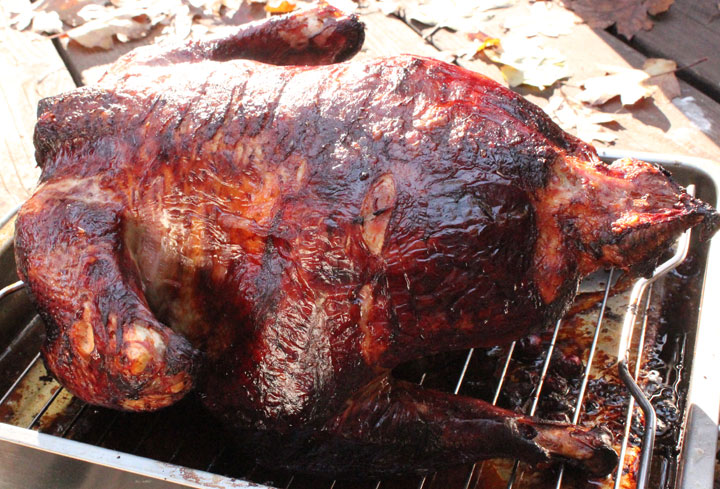
I’ve been a brining convert for the last few years. I find that it helps deal with a few of the oopses that can occur when cooking a very large bird. Brining fills the meat with flavor, no worries about missing a spot when seasoning. It helps keep the turkey moist and juicy — even if you leave it in the oven a tad too long. It helps make the skin crispy, too, as you don’t need to worry about baking bags and the like. Plus, you can kiss that baster goodbye because there’s still plenty of the juices left in the bird — you don’t have to continuously drizzle them back on. All that said, I do like to mix up the recipe each year so that the turkey on the Thanksgiving table keeps people oohing and ahhing. For 2012, I used a brine with lots of red ingredients, making for one beautifully roasted bird.

Drunk Ruby Turkey

1 turkey
4 cups (32 oz) cranberry juice
2 bottles red wine (I used a good quality boxed wine so I had extra, just in case.)
zest and juice from 4 oranges
zest and juice from 4 lemons
2 cups cranberries
4 stalks lemongrass, chopped
1/2 cup fresh ginger, grated
1/2 cup fresh mint, chopped (I ended up using a dried bunch that I had hung this summer.)
5 Tbsp. whole, mixed peppercorns
2 Tbsp. kosher salt

At least 8 hours before serving, place all ingredients in a stock pot that is large enough to hold the turkey and liquid. Cover and refrigerate.
When ready to cook, preheat oven to 400°.
Pour brining liquid through a sieve. Discard liquid and put solids in turkey cavity.
Place turkey, breast side up, in a large pan with a metal cooling rack set inside, and cook until meat thermometer reads 165 degrees F. Turn the bird over 1 hour in so that juices drain into the breast and the entire turkey gets crispy.
Let the turkey rest on the counter for 20 to 30 minutes before carving.

  • Recent Posts

  • Archives

  • Categories

  • Meta