Lemon Rosemary Cornish Game Hens

Cornish Game HenSome weeks are so full of so many tasks, when everything finally winds down, a little comfort food is in order. While baked chicken is always a winner, I wanted to change things up a bit, do something more individualized. I’ve always wanted to cook Cornish game hens. They’re so small yet fancy. When served with roasted carrots and an Anderson Valley wine, our cares just slipped away.

We paired our hens with 2012 Husch Renegade Sauvignon Blanc. The way the wine picked up the rosemary in the bird was dynamite! I savored every mouthful.

Lemon Rosemary Cornish Game Hens


Serves 4

2 Cornish game hens
salt and pepper to taste
1 lemon, cut in half
2 fresh rosemary sprigs
extra virgin olive oil
8 garlic cloves, peeled
1/3 cup white wine
1/3 cup chicken broth (I just used some broth I had frozen in ice cube trays and scattered the cubes around the pan.)

Preheat oven to 450 degrees F. Season birds, inside and out, with salt and pepper. Squeeze juice from half a lemon into the cavity of each bird, then place the half inside the cavity. Place the rosemary sprigs inside of each bird. Rub hens with olive oil and place them on a rack inside a roasting pan. Place garlic around birds.
Roast for 25 minutes then lower oven to 350 degrees. Pour the wine and broth into the pan and roast about 30 minutes more or until the birds are golden brown and the legs begin to fall away from the body.
Cut hens in half and serve.

Pork Udon

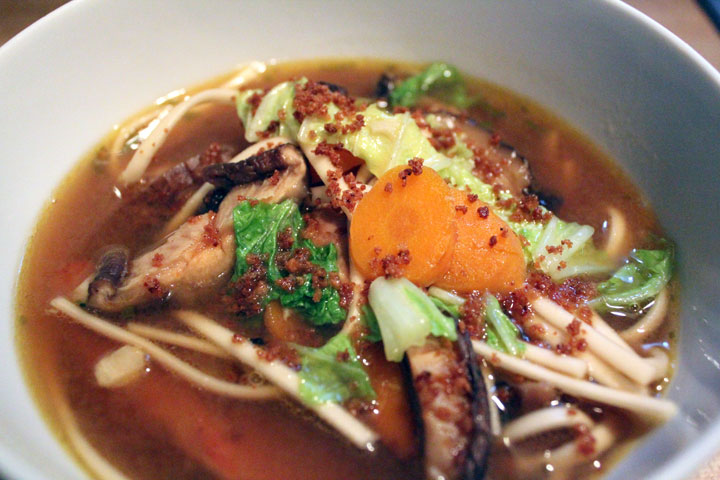
Pork Udon

Soup’s been on the menu quite a bit this week. Maybe it’s because of the change of the seasons. Maybe because it can be a complete meal contained in a bowl. Maybe just because it’s delicious.

In Japanese culture, udon noodles are served chilled in summer and hot in winter. There’s starting to be a nip in the air come evening, so creating a hot soup was a no-brainer, though during the day, summer’s been reminding us here that it’s not done until Monday. We paired our soup with what could be considered an interesting choice — Curtis Winery 2011 Heritage Cuvée. However, Rhone blends are very versatile when it comes to pairing, and this was excellent with the meal, picking up the earthy flavors of the shitakes and Tamari while highlighting the caramelized sweetness of the carrots. It made for a hearty supper and a lovely glass of wine.

Pork Udon


Serves 4

1 Tablespoon sesame oil, plus more for Panko crumbs
1 pound of pork shoulder, sliced thinly
pinch of salt
1 cup chopped carrots
1 teaspoon coconut sugar
1/2 cup Panko crumbs
3 teaspoons grated ginger
5 cloves of garlic, chopped
2 Tablespoons chopped chives or scallions
8 cups of chicken broth
1 ounce package of dried shitake mushrooms or eight fresh mushrooms, sliced
1 Tablespoon light sodium Tamari
1 8 ounce package udon noodles (I used Koyo Round Noodles)
1 cup Napa cabbage, chopped
Sriracha to taste

In a large skillet or stove top wok, heat the sesame oil over high heat. Add the pork and pinch of salt, letting each side cook until browned, usually about three minutes per side. Remove pork and set aside.
Toss in carrots and sugar and stir until carrots have caramelized. Remove carrots and set aside.
Throw in the Panko. You may need a bit more oil. Stir crumbs until they turn golden-brown. Drain on a paper towel.
Turn heat down to medium and place ginger, garlic, and chives in the skillet. Stir until the aromas are released, then pour in stock. Toss in the mushrooms, and pour in the Tamari. Add pork and carrots and let simmer 30-45 minutes.
Add noodles and cook another six minutes.
Add cabbage and cook two minutes more.
Place in bowls. Add sriracha if wanted and sprinkle with crunchy Panko.

A Perky Steak and a Sexy Wine

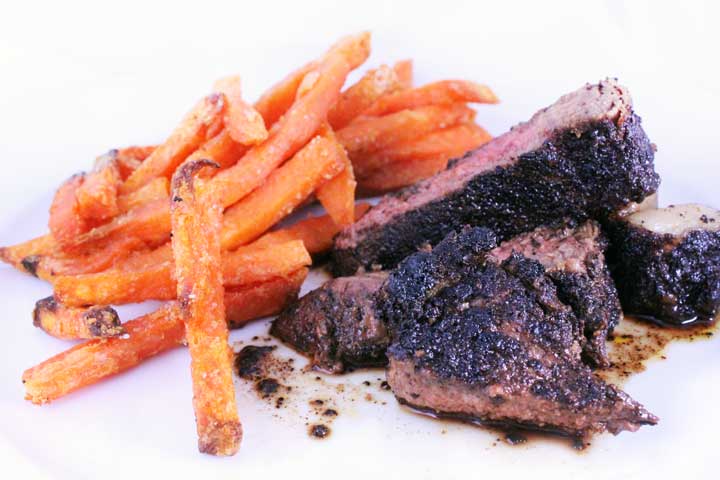
steak with a coffee spice rubSince I regaled you with my Healdsburg trip last week, I thought it only right that I share a recipe to go with one the wines we purchased on our mini-vacation.

I chose Wilson Winery’s “Carl’s Zinfandel Dry Creek Valley.” It’s such a lovely, well-balanced Zin — actually, quite a seducer with its smoky, white pepper nose and coffee, chocolate, and plums on the palate. Mmmm. I wanted to make a dinner that would complement this Casanova to the utmost, and because of its lovely tannins and inky fruit, I knew a steak would do nicely.

But not just any ol’ steak. I wanted something that would help bring out all of those wonderfully rich flavors in the glass, something that could be just as provocative on the plate.

Steak with a Coffee Spice Rub


serves 2
1 ribeye steak, cut into two equal pieces
1/2 cup freshly ground coffee (I used a light roast Ethiopian Yirgacheffe.)
1 teaspoon freshly ground black pepper
1 tablespoon coconut sugar
1 teaspoon smoked paprika
½ teaspoon mustard powder
1 teaspoon garam masala
Pinch of salt

Combine coffee and spices. About an hour before cooking, rub the coffee mixture over the steaks, then toss everything in a sealed bag for a nice, even coating. Keep in the fridge until ready to cook.

Preheat a cast iron griddle or skillet over medium-high heat. Drizzle the griddle with grape seed oil and carefully lay down the steaks. Cover with a large lid and cook for 3-5 minutes, then turn over with a pair of tongs. Lower the heat, replace the lid, and cook another 3-5 minutes, until medium rare.
Serve with sweet potato fries that have been cooked just long enough to brown at the ends, creating a caramel crisp edge.

Portobello Burger

portobello-burgerThere are a lot of good veggie burgers on the market, but since I’m very Hobbit-like when it comes to food choices, if I’m presented with a mushroom, I’m going to eat it.

One of the nice things about making portobello burgers is that the patty is already made for you. All you have to do is brush off any lingering dirt, and there you are. I like to rub on a little gluten-free Worcestershire sauce to give it more of a robust, meaty taste. (Make sure it’s GF if you’re sensitive. Worcestershire sauce usually contains wheat.) I do that to my hamburger too, so it’s not just a veggie thing. Then it’s time for my stove-top grill, and it’s done before I can even contemplate getting impatient. Suddenly, there’s a meatless meal that’s still incredibly hearty.

Maybe the best part — there are so many ways in which you can pair this burger! A Sangiovese or Sangio blend would be stellar. I had our previous blend winner, Montoliva’s 2009 Sierra Bella. It’s sold out, but our newest blend winner will soon be available. The 2009 is really coming into its own — lots of good tannin structure, ripe, well-rounded fruit… it was a wonderful pairing with dinner. Or you could have a good Pinot Noir. Its earthiness would compliment your portobello wonderfully. This was actually my first instinct. Of course, if you’re feeling like a good burger deserves a good beer, you can’t go wrong with a porter. Deschutes Black Butte Porter comes to mind… I may need to go make a few more just to play with the pairings.

Portobello Burger with Goat Cheese


serves 1

1 portobello mushroom, stem removed and cap brushed clean
a sprinkle of gluten-free Worcestershire sauce
1.5 oz chevre (I used Laura Chenel Cabecou)
1 leaf of escarole
1 roasted red pepper in olive oil
1 teaspoon horseradish sauce
1/2 a small avocado, sliced (Use the side without the seed so that the rest of the avo can be saved for later. The side with a seed still in it tends to oxidize slower.)
gluten-free hamburger bun (I used Rudi’s.)
extra virgin olive oil
salt, pepper, and garlic powder to taste

Preheat grill over medium heat. Rub a bit of Worcestershire sauce on the cap of the mushroom, flip over and rub in a bit more. Place bottom-side-down onto the grill and cook for three minutes.
Flip over and place chevre on mushroom. Cover with a lid and cook for another three minutes.
While burger is cooking, drizzle the inside of the hamburger bun with olive oil. Sprinkle with garlic powder and set on the grill to crisp and brown. Flip when you flip the portobello.
Remove bun and burger from heat. Place burger on the lower half of the bun. Spread the horseradish sauce on the inside of the upper bun. Layer burger with roasted pepper and avocado. Sprinkle a bit of coarse salt and grind a bit of black pepper on top. Lay your crisp piece of escarole on top, set on the top bun, grab a bunch of napkins and your drink, and dig in.

The International Alsace Varietals Festival

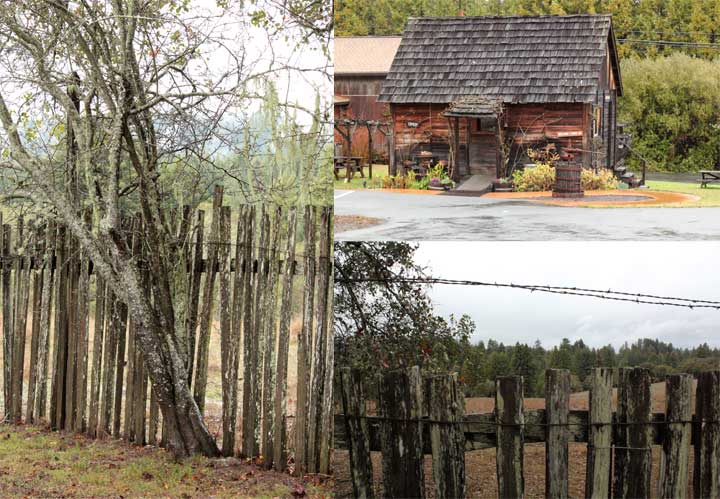
Alsace FestivalLast weekend, we attended the International Alsace Varietals Festival in Anderson Valley, California. It was our second year attending, and something we plan to repeat each year. As I’ve mentioned a few times, Anderson Valley is one of our favorite areas in the world. It’s one of those places that feels like home, and the festival is a great reason to visit.

Alsace varietals that are focused on for the festival are Riesling, Muscat, Gewurztraminer, Pinot Blanc, and Pinot Gris. (Also in the Alsace varietals are Pinot Noir and Sylvaner as well as Auxxerois, Chasselas, and Chardonnay, via WineFolly. Anderson Valley has a separate Pinot Noir Festival in the spring.)

Last year’s focus was a bit more farm-oriented, and we learned a lot of interesting things about the challenges of growing grapes. This year was a bit more varietal focused. The first panel was about Riesling and the second about Gewurtztraminer. That meant we got to start sampling wines right away – score! – as well as learn about farming those specific varietals, environmental effects, bottling and closure choices, and fermentation practices. I loved it and took copious notes. The wine geek in me rejoiced.
food pairingThe third panel brought even more fun, focusing on food pairings from frog legs to stinky cheese. Flammekueche, Salad Truite Fumee, Terrine de Cuisses (frogs legs), Charcuterie et Moutarde, Goose Liver Pate, and Alsace Munster Cheese with Caraway Seeds and Sugared Walnut created a meal unto itself. Chef Lars Kronmark made excellent choices for the pairings, and all of the wines were amazing. Maybe because of my Super Taster-ness, maybe because I’ve never been a liver lover, but as beautiful as the chef made the goose liver sound, I couldn’t enjoy it. It was way too strong, but I enjoyed everything else, especially the smoked trout (Truite Fumee) and the Munster/sugared walnut pairings – delectable!

After filling our bellies with amazing food and wine, it was on to a cooking demonstration. Chef Francois de Melogue showed how to make Moroccan Sea Scallops to pair with Gewurztraminer. It was a gorgeous plate, and he was quite entertaining. If I’m ever in La Quinta, I’ll be visiting FIGUE, the restaurant where he’s the Executive Chef.

Then it was on to the Grand Tasting in which we enjoyed the craft of many wineries and continued to eat awesome things like pork belly and pizza. I love me some Anderson Valley Alsace wines, but there were also awesome options from Michigan and the Finger Lakes region of New York. Charles and I were quite taken with the wines of Fox Run Vineyards from Penn Yan, NY.
Husch VineyardsTo top off the weekend in extraordinary fashion, Sunday was spent traveling from winery to winery. We started with our absolute favorites, all three of which we’re wine club members: Handley Cellars, Husch Vineyards, and Navarro Vineyards. From there we ventured to Balo Vineyards, Esterlina, Phillips Hill Winery (At Phillips Hill I also learned that 1)my One Pan Meal is actually a traditional Alsatian meal and 2)it pairs amazingly with Alsace whites), and finished with a visit to Brutocao Cellars. We have never gone to so many wineries in a day, but it was so worth it. Everything we tried was terrific, proving once again that Anderson Valley wines are a force to be reckoned with. Man, I love them! If you’re a wine lover, especially of Alsace varieties, and have never had Anderson Valley wines, what are you waiting for? You won’t be disappointed, and you will be quite pleased to add another region to your go-to list for great wines.

We ended our final evening in the valley with a dinner at Aquarelle. I had a sumptuous swordfish that was absolutely delightful. The vibe was rustic/modern and like all good Anderson Valley things, casual and comfortable. The food was gourmet and very reasonably priced and was the perfect way to top off the weekend. We fell into bed that night quite satisfied with our festival experience and vowed to visit more regularly. We really do love it.

Other don’t-miss places while you’re in the valley besides the ones already listed:
Mexican food at Libby’s
Booneville General Store for an amazing breakfast or lunch
Mosswood Market and Café for great coffee and amazing empanadas
Coq Au Vin for lovely French Country cuisine
Lauren’s Café for an awesome home-style dinner (and the owner is SO NICE.)
Lemon’s Market and Deli for a quick but very tasty sandwich
Anderson Valley Brewing Company for some of the best beer anywhere (I had an ESB this trip — OMG!)
and where we always stay:
Anderson Valley Inn (the owners are awesome and do so much for the community)

Acorn Squash Lasagna

acorn squashRemember last week when I waxed poetic on winter squash? Well, today I’m going to share a recipe, a pairing, and an amazing tip that I received from my friends Joey and Bill.

The dinner party that Charles and I had attended at the aforementioned friends’ house had winded down. As we shared a bit of dessert and finished our wine, they shared with us their secret to cooking winter squash — the slow cooker. It’s easy, Bill told us, you just poke the squash with a fork a few times, stick it in the cooker — no water needed — turn it on low, and let it go.

Of course, I had to try it myself. I washed off an acorn squash, (it still had some farm dirt on it,) poked some holes in it with a fork, and stuck it in the slow cooker before I left for work. When I got home that afternoon, the house smelled heavenly, and the squash was cooked perfectly. So easy! Thanks to Joey and Bill’s tip, winter squash will now be a main ingredient in many a dinner in the months ahead.

My now cooked squash became the star of the evening meal, Acorn Squash Lasagna — one of my all-time favorite dishes. I’ve played with the recipe a few times over the years, tweaking it until I was perfectly happy with it. It’s savory and just a wee bit sweet and filling enough that a square will do you for your dinner requirements.

winePairing this lasagna has always been more of a challenge than cooking it, as the squash flavors and cheese flavors don’t always complement a wine well, but I finally found something that works wonderfully. It’s Ventana‘s Chardonnay, a wine that Charles had brought into the store on a vendor’s recommendation. He had brought home the last two bottles the week before. A side note — the psychology of shoppers is often interesting. Did you know that customers are uncomfortable with purchasing the last item on the shelf? Especially with wine and beer, that last bottle will just stand lonely on the shelf while people pass it by. Because of this, Charles often purchases the final hold-outs of wine vintages and seasonal beers. It works for us, as Charles stocks his shelves with excellent options, and our cellar becomes more and more diverse. But back to this particular pairing … the Ventana paired well, its creaminess rounding out the lasagna. Nutmeg characteristics in the glass were the perfect, seasonal accompaniment with the squash. The pairing just screams, “Autumn!”

lasagna
Acorn Squash Lasagna

serves two

1 acorn squash, cooked, seeds and skin removed
1/4 teaspoon dried, rubbed sage
salt and freshly ground pepper
8 ounces goat ricotta cheese
1/2 cup grated Parmesan
4 gluten-free lasagna noodles (I used Tinkyada Rice Lasagna)
1 egg, beaten
1 tablespoon butter

Preheat oven to 400 degrees F.
Cook lasagna noodles to package directions. I broke mine in half to fit the baking dish nicely.
Rub butter along the insides of a square baking dish.
Mix squash with sage, salt and pepper.
Mix ricotta with egg.
Place two lasagna pieces in the bottom of the dish. Spread with half of the squash.
Place two lasagna pieces on top, and spread with half of the ricotta mixture.
Repeat the lasagna-squash step, then the lasagna-ricotta step.
Sprinkle the top of your creation with the Parmesan, cover the dish with foil, and cook for 45 minutes. Remove the foil and cook for 20 more minutes.

Jambalaya

jambalayaI’ve made jambalaya before, but I had a different goal in mind with this creation — finding a white wine that would work.

Every year, I’m in charge of putting together the annual owner meeting for the store. Each year, the event has become more and more successful, to the point that I’m now coordinating an event for 500 co-op owners. Past themes have included Halloween, Oktoberfest, wine harvest, and Italian cuisine. This year, the focus is on Cajun food.

It promises to be chilly the evening of the meeting and dinner, so the spicy jambalaya that will be served should be well received. However, attendees have come to expect a good wine or beer pairing with the meal, and since some people are red wine drinkers exclusively, while others are exclusive to white wine, the multi-layered flavors of this year’s main dish posed a bit of a challenge.

The red wine choice was pretty straight forward — a fruit-forward Zinfandel seemed like the best option. Since my partner is also the wine buyer, I bowed to his preference for the label. Charles opted for Sobon — always nice. But the white, the white … with sausage and shrimp and chicken and spicy … my first instinct was for an off-dry Riesling, but we wanted to test it out. I’ve read that Sauvignon Blanc can work as well, so I put together a quick jambalaya and got to tasting.

While the Sauv Blanc stood up to the dish, it was just present. It didn’t sing. Then we tried an off-dry Riesling and found the tune. The sweetness harmonized with the spiciness quite well, and it paired nicely with each meat in the dish. So my first instinct ended up being the right one. We’re going with Pacific Rim. All of their wines are lovely and all pair so well with food.

Of course, I’d be remiss if I didn’t share with you our beer choice for this year as well. We’re offering Anderson Valley Brewing Company Winter Solstice and Boont Amber. Mmmm… such good beer!

Quick Jambalaya (not really traditional, btw)

12 prawns, peeled, deveined, and chopped
1 chicken breast, diced
1 tablespoon Cajun seasoning (I actually used a rub)
2 tablespoons olive oil
1 green bell pepper, chopped
1 yellow onion, chopped
2 cloves of garlic, smashed and chopped
3 Roma tomatoes, chopped
3 bay leaves
1 teaspoon Worcestershire sauce
1 teaspoon hot sauce (I actually used sriracha since I already had it in the fridge.)
3/4 cup rice
3 cups chicken stock
2 Andouille sausages, sliced
salt and pepper to taste

Toss prawns and chicken in a bowl with the seasoning, set aside.
In a saucepan over medium high heat, add olive oil, onion, and bell pepper. Cook for three minutes, then add garlic, tomatoes, bay leaves and sauces. Add rice and slowly stir in chicken stock. Reduce heat to medium and cook for 15 minutes, stirring occasionally.
Add meats and cook until meat is done, about ten minutes. Season with salt and pepper to taste. Remove bay leaves and serve.

  • Recent Posts

  • Archives

  • Categories

  • Meta