Symphony of the Soil

Symphony of the SoilSymphony of the Soil” is the perfect way to end this year’s Friday Food Film series. Without soil, there is no life – soil is that thin layer where life is possible.

The miracle of how all things on this planet exist is presented in a journey of how soil forms, from glaciers wearing rock down to a mineral sludge that flows into the sea, to sphagnum moss, to sand, the film explores the trifecta that allows us to feed ourselves.

Beautifully shot with sweeping images, “Symphony of the Soil” allows you to marvel at the complexity of our world as well as gifting you to travel virtually to Wales, Hawaii, Egypt, India, and more.

As someone who is rather in love with geology, this film was a treat. Even if studying rocks isn’t your jive, “Symphony” is fascinating and easy to watch with animated watercolors prettily explaining how healthy soil functions and grows.

It’s a little too easy to take soil for granted. It’s integral to our existence, but it dwells beneath our feet. The film does an amazing job of allowing soil to be the star of the show. We’re shown how we treated it in the past, how we’ve misused it, and how we’re beginning to respect it once again.

The health of our soil is not only the health of our ecology, but our health as well. Only by learning how to treat it as the living organism that it truly is will we be able to heal our planet and create a system that allows all life – including the gigantic number of human beings – to thrive.
In Organic We Trust

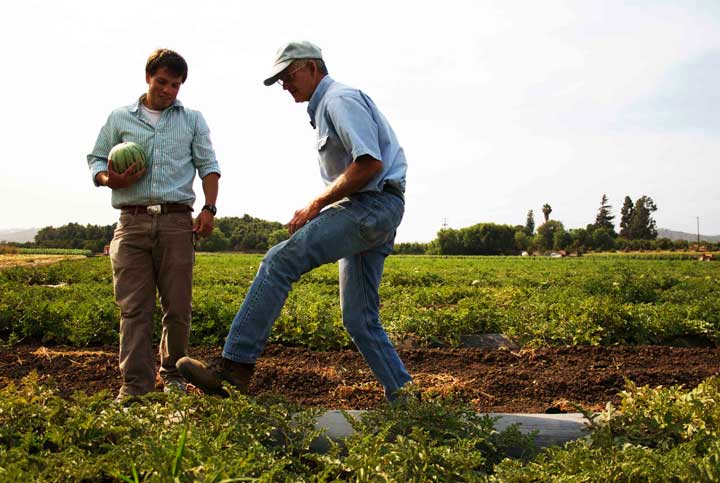
In Organic We Trust Watermelon FarmIn Organic We Trust” begins with a montage of produce and organic processed foods. Kip Pastor, the film’s writer and director, then takes the viewer on an organic journey, exploring the truth behind organic food.

Peppered with interesting statistics, such as 73 percent of Americans eat at least some organic food, “Trust” is interesting as well as fun.

Even working in organic foods for as long as I have, I can attest to how confusing some aspects can be, and Pastor does a terrific job of laying out the specifics to what is required to become certified, what the value of organic certification is, and the philosophies that motivate organic farmers.

From government regulations and the disinterest of the USDA to communicate with the public to the corporate organic movement (organics have become profitable and big ag wants in), what could have been just a dry presentation of facts – did you know that to be certified, a farm is required to have a three year transition? – becomes personal and intriguing as the filmmaker tells the story of many organic farmers and farms including such stars as Full Belly Farm, Knoll Farms, and Sierra Orchards.

The world of organic foods is complex, something Pastor discovered as he explored the motivations behind those organic cookies on the shelf, but by the end of the film, both he and the audience have rediscovered the importance of an industry that’s less than one percent of total agriculture.

By embracing the philosophies behind organics, as well as supporting movements like Slow Food USA, local food, farmers markets, and urban farming, we as consumers are staying in control of what we put in our bodies as well as contributing to a more sustainable future. Pastor learns that organics is much more than pesticide-free food. It also means cleaner water, more efficient use of energy, and a healthier climate. By becoming educated about what he eats and not just blindly trusting a word, his understanding becomes just as well rounded as his meals.

Greening the Revolution

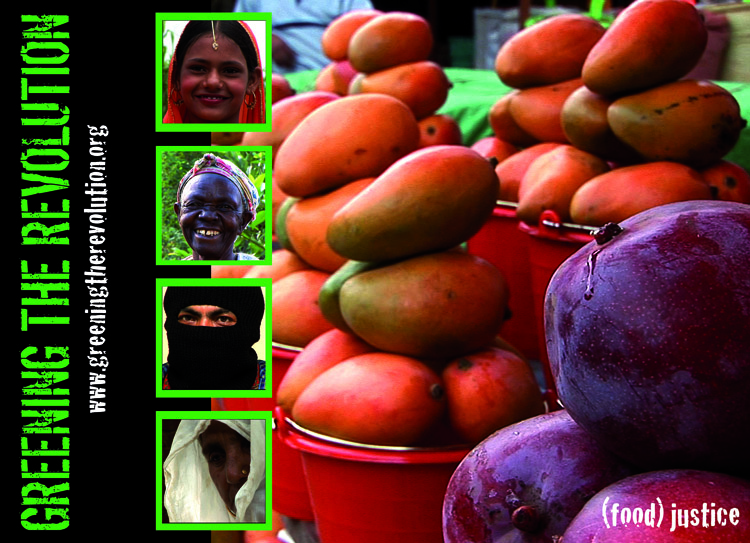
Greening the RevolutionGreening the Revolution” begins with a very compelling quote, “Why are some people eating and some are not in a world of plenty?”

Backed by an international soundtrack representing the countries on the screen, the film looks at how NAFTA and the “Green Revolution” have changed the way food is viewed in the world.

From mud cakes used to fight off the gnawing effects of hunger in Haiti, people working themselves to death farming in Mexico, to a spokesperson for Monsanto talking about how exciting it is to be in agriculture in this period of our history, the film adeptly focuses on the myriad of issues involving food in the present day global economy.

While a representative of the World Bank speaks of how she knows of no one who feels that globalization is anything but positive, we’re faced with scenes of impoverished farmers, women forced into prostitution in order to feed their children, and sky rocketing food prices.

At the Pine Ridge Reservation in South Dakota, where the slaughter of the buffalo led to a dependency on processed food allocated by the government, half of the population over 40 has diabetes.

“Globalization fosters food insecurity on many levels, not just starvation,” said a tribal representative.

People all over the globe are experiencing that food insecurity. An Iowa farmer’s business folded after his pigs – that were fed GMO corn – had reproductive issues. 80 percent of his sow herd was unable to get pregnant. Farmers in India are committing suicide in record numbers – 250,000 have died so far – because of the debt incurred by growing GMO crops and the vicious cycle of dependency that stems from that use. Farmers drink the pesticide or herbicide that caused their debt.

“The ‘Green Revolution’ is directly responsible for my son’s death,” said a grieving father.

The film also explores the issue of speculation in commodity markets and how that caused the food crisis of 2008 where corporations saw record profits while people starved.

History has shown that this type of treatment cannot continue. The people will rise up and fight for their food rights, and therein lies the hope for the future. Not only are we living in a global economy, we’re also living in a global culture, one that can rise up together. There is now a worldwide movement for farmers to unite and take back their land. Corporations like Monsanto, as well as the WTO and NAFTA, may not be the highest powers forever, but it will be a global grassroots effort that’s needed to change that.

“Greening the Revolution” plays in BriarPatch Co-op’s Community Room on Friday, February 8 at 7:00 p.m. It’s free and open to the public.

  • Recent Posts

  • Archives

  • Categories

  • Meta